
When you have the information but not the outcomes...
It’s a capacity problem. Workleap fixes it. Workleap is a people management platform built around AI. It combines information analysis with recommended actions and automated follow up. Visibility and action, both solved.
4.5
(1,075 + Reviews)
4.8
(115 + Reviews)

More than a dashboard.
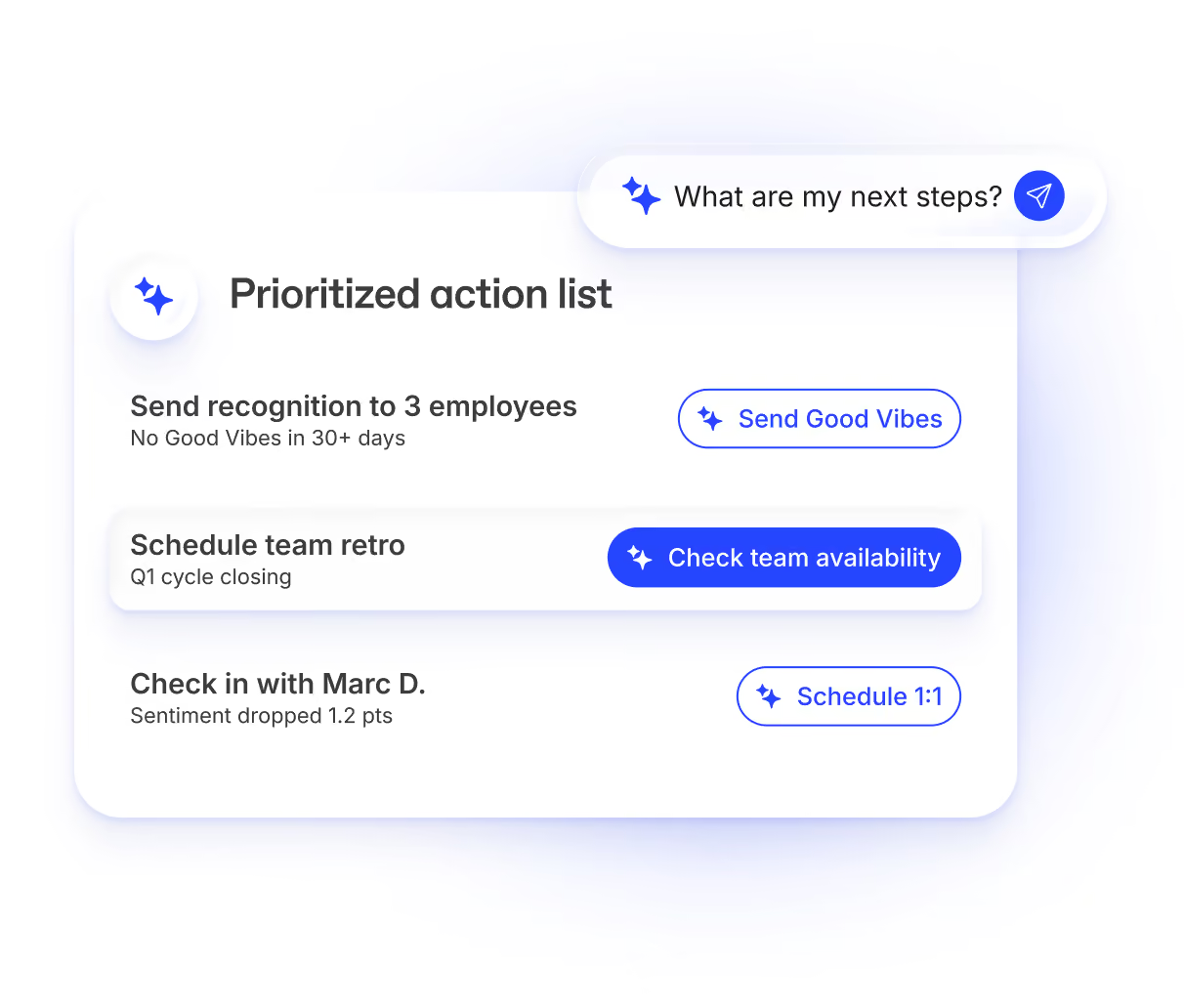
Workleap also acts on what the dashboard shows. The agent reads the signals and delivers contextual guidance to the right manager before the next 1:1, review, or conversation. HR sets the standard, Workleap follows through.
Before Workleap
- Signal appears in dashboard.
- HR creates an action plan.
- Sends to manager. Gets lost in inbox.
- Problem persists.
vs
After Workleap
- Signal detected by agent.
- Agent delivers specific guidance directly to the manager.
- Manager acts before the next 1:1.
- HR sees the outcome, without a single follow-up.
The Workleap experience
Workleap is a leap forward in the way companies manage people. From monitoring signals to generating actionable insights to the tools to follow up, Workleap puts real visibility and control into the hands of HR, for more supportive and effective workforce management.
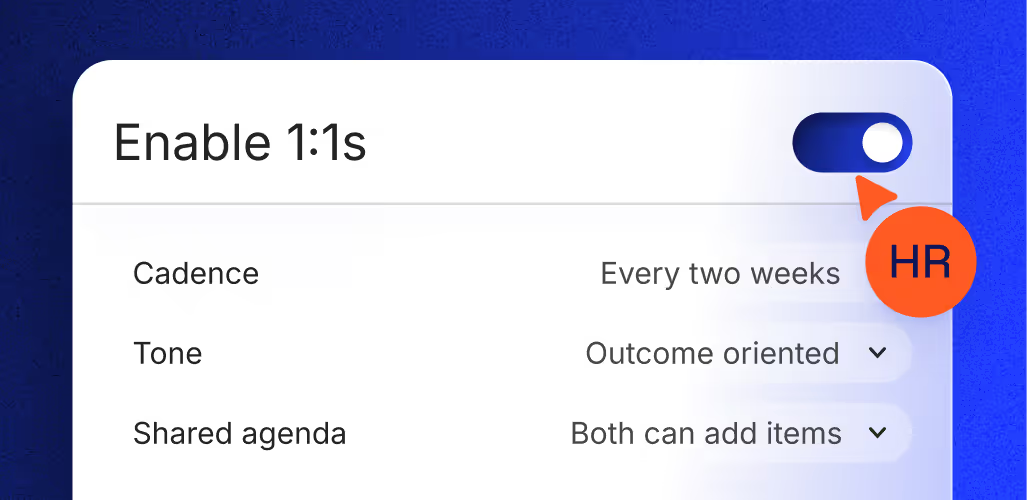
HR sets the standard.
HR defines the management framework: engagement thresholds, coaching intervention triggers, check-in cadence, good management expectations. Clear standards, set once across the entire organization.
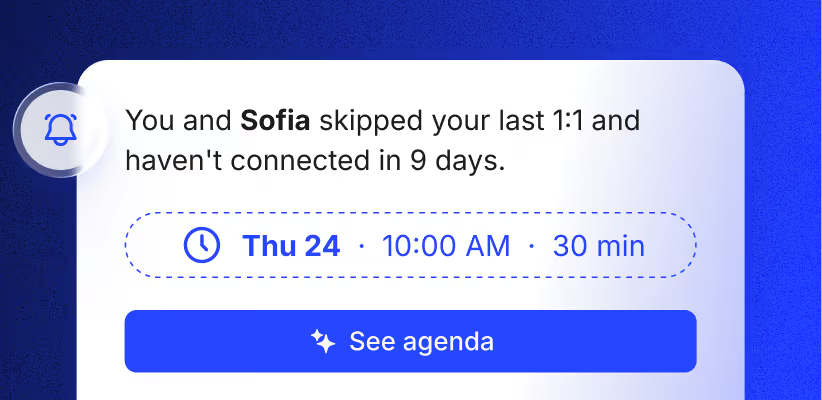
The agent acts.
The always-on agent monitors signals in real-time. When an issue is flagged, it doesn’t wait for the next review cycle. It identifies the relevant manager, drafts specific guidance, and delivers in advance of their next 1:1. Every signal, every manager, every time.

HR sees it all happen.
HR sees what guidance was given to whom, and whether or not it was acted upon. Reminders are automatic. No growing todo list. No manual chasing. The follow-up loop closes itself.
Insight without action is just hindsight.
Every dashboard that closes without manager follow-through is a missed window of opportunity. The disengaged team that HR flagged but didn’t notify. The performance pattern which stayed in the report. By the time the data is discussed at the next QBR, the cost has already been paid.
“Only 27% of employees strongly agree their organization follows through on survey results."
– From Gallup
Over 70,000 leaders worldwide choose Workleap.





“
The data that Workleap provides us is great to influence business decisions at an executive level […] and support other projects that we’re working on.“
Stéphanie Nadeau
Director of HR

“
Once you start really using it, it just gets better and better because the data you collect helps you make informed decisions on how to improve the employee experience.”
Jean-Philippe Dauphinais
CEO & Co-Founder

“
Workleap gives us the opportunity to quickly put concrete actions in place; we don’t have to wait months to change and improve things.”
Francesca Lévesque
Advisor, Employee Programs & Human Capital

“
Without data, employee experience is impossible to understand. With Workleap, we moved from gut feelings to real visibility.”
Serena Amante
Chief Human Resources Officer

“
Workleap has been instrumental in taking us a step closer to really enabling and empowering our people leaders to have our people-first mindset and get to know where to focus their energy.”
Sara Attree
Head of People Experience

“
Workleap has been a huge support for managers, especially first-time managers. They used it to draft reviews, which gave them confidence and ensured that feedback was both valuable and high-quality."
Afiqah Mustafa
Manager of People Analytics & Rewards
See how Workleap augments your team.
Join over 70,000 leaders worldwide