A salary band is a defined pay range for a role or level.
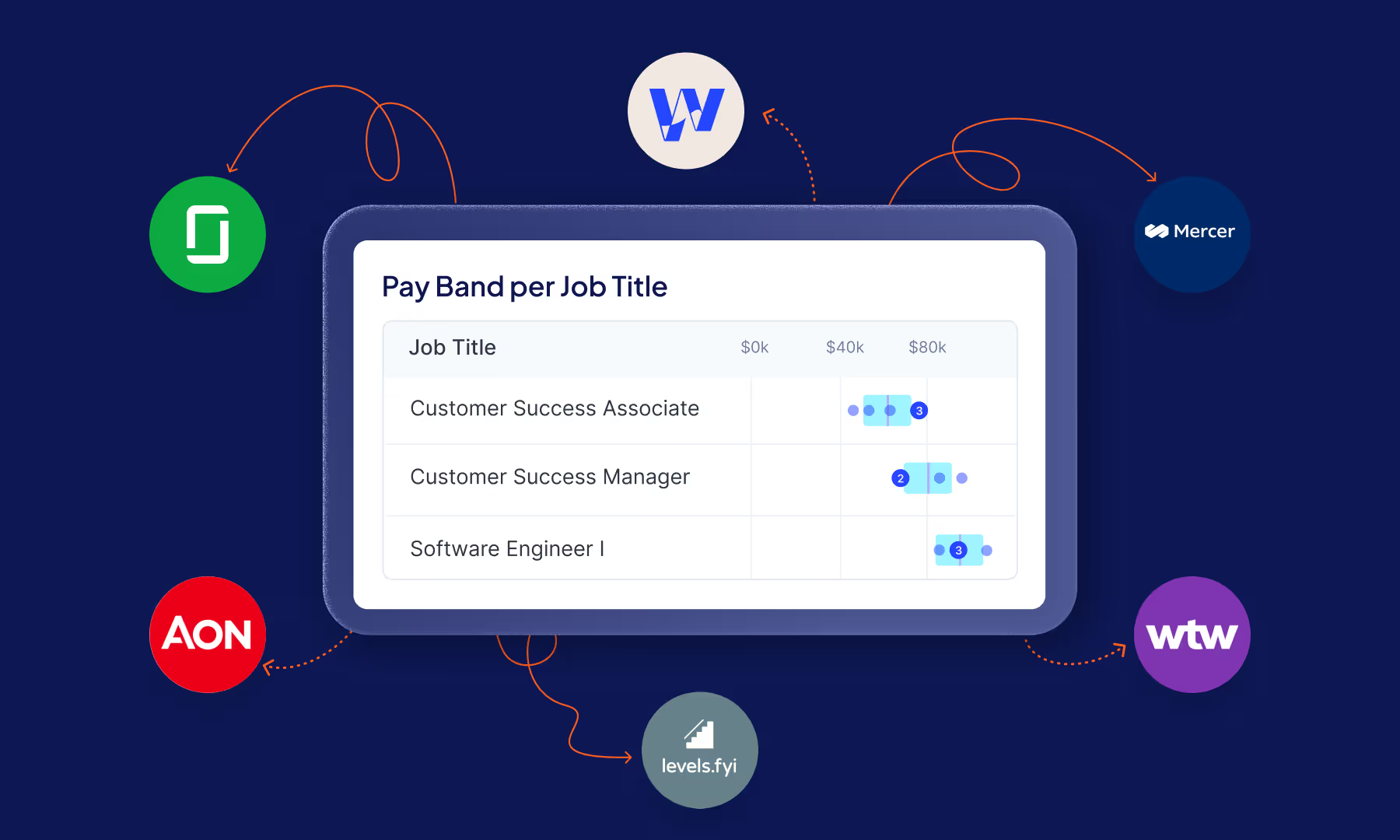
Salary bands create guardrails for offers, raises, and promotions. They help teams pay more consistently and reduce negotiation-driven differences. For SMBs, bands become important as soon as you have multiple hiring managers or you are scaling quickly, because pay inconsistency shows up fast and can damage trust.
Bands also support pay transparency because they give managers a structure to communicate. To start, create bands for your most common roles, align them to role scope and level, and review them annually with market data. In hybrid teams, bands are a fairness tool because they anchor pay to scope and outcomes, not visibility.
Commonly confused with: pay grade
A pay grade often groups multiple roles into a level, while bands can be role-specific ranges. Many SMBs start with bands because they are simpler, then add grades or leveling frameworks as they mature.
Workleap field notes from SMB clients
- What Workleap clients are saying: From conversations with our SMB clients, salary bands tend to drift when they live in spreadsheets and aren’t maintained after hiring waves.
- Why it matters: Bands only improve fairness when they’re kept current, understood by managers, and applied consistently.
- In practice: Elastic Path wanted more structure and consistency in pay decisions during active review cycles. They simplified compensation planning and clarified how managers should work through decisions. The result was less friction and more consistent decisions across teams. See: How Elastic Path simplifies comp reviews, empowers managers, and saves time with Workleap Compensation.
Use market data, role scope, and internal leveling. Document what differentiates levels so the band makes sense. Start with key roles and refine over time.
Wide enough to allow growth, but not so wide it becomes meaningless. Early-stage SMBs often start wider and narrow as roles become clearer. The best width is one managers can apply consistently.
Many SMBs share ranges internally to reduce rumors. If you share bands, explain how progression within a range works. Clarity on leveling is key.
Raises move within a band. Promotions typically move to a higher band or level. Bands help define when a role has outgrown its current scope.
Creating bands without clear role definitions, not updating them, and treating them as rigid rules instead of structured guidance. Bands work when they are maintained and explained well.


%202%20(1).png)