Pay transparency is here in Canada: what Ontario and B.C. employers should do next


This article was co-written by Laura Risdorfer, Manager of Talent Acquistion at Workleap, and Julien Boulanger, Director of Compensation at Workleap.
Pay transparency used to be optional in recruitment. Now it’s becoming the default expectation—backed by legislation.
If you’re hiring for roles based in British Columbia, pay transparency requirements for job postings are already in effect: public job postings must include pay information.
If you operate in Ontario, new job posting and pay transparency requirements are coming into force on January 1, 2026 for employers with 25+ employees.
And if you’re thinking: “Okay… but what does this mean for my comp strategy, my managers, and my internal pay structure?” you’re asking the right question.
Note: This article is for general information only and isn’t legal advice. If you’re preparing for compliance, it’s worth validating your approach with legal counsel.
What pay transparency actually changes (beyond job postings)
Pay transparency laws don’t just affect how you recruit. They change how employees interpret fairness.
The moment you publish pay ranges externally, people internally will ask:
- “Where do I fall in that range—and why?”
- “Are we consistent across teams and locations?”
- “If I’m below the range, what’s the plan to close the gap?”
- “Can my manager explain this clearly?”
That’s why “pay transparency readiness” is less about a single job posting update—and more about having a defensible, repeatable compensation foundation.
What’s changing in Ontario (effective Jan 1, 2026)
Ontario’s incoming requirements focus on publicly advertised job postings and apply to employers with 25+ employees.
Key requirements (high level) include:
- Include expected compensation or a compensation range in publicly advertised job postings (with specific rules around ranges).
- Disclose use of AI in screening/assessing/selecting applicants (if applicable).
- State whether the posting is for an existing vacancy.
- No “Canadian experience” requirement in the posting/application form.
- Candidate communication + record retention requirements (e.g., informing interviewees when a hiring decision has been made, and retaining posting/application records for a period of time).
If you’re already running structured pay bands and consistent approvals, this is manageable. If you’re still stitching together spreadsheets, it’s going to feel… loud.
What’s already in effect in British Columbia
B.C.’s Pay Transparency Act includes a few big, practical implications for employers:
- Job postings: As of Nov 1, 2023, public job postings must include expected pay or pay ranges.
- Pay history: Employers can’t ask applicants what they were paid by other employers.
- No reprisal for pay discussions: Employees are protected when asking about pay, sharing pay, or asking about pay transparency reporting.
- Pay transparency reporting: Employers above certain size thresholds must publish annual pay transparency reports (phased in).
The upshot: even if you “only” think this affects recruiting, it quickly becomes an internal comp and manager enablement issue.
A practical checklist: how to get ready without panic
Here’s the work that makes pay transparency sustainable (and defensible).
1) Create pay bands you can explain
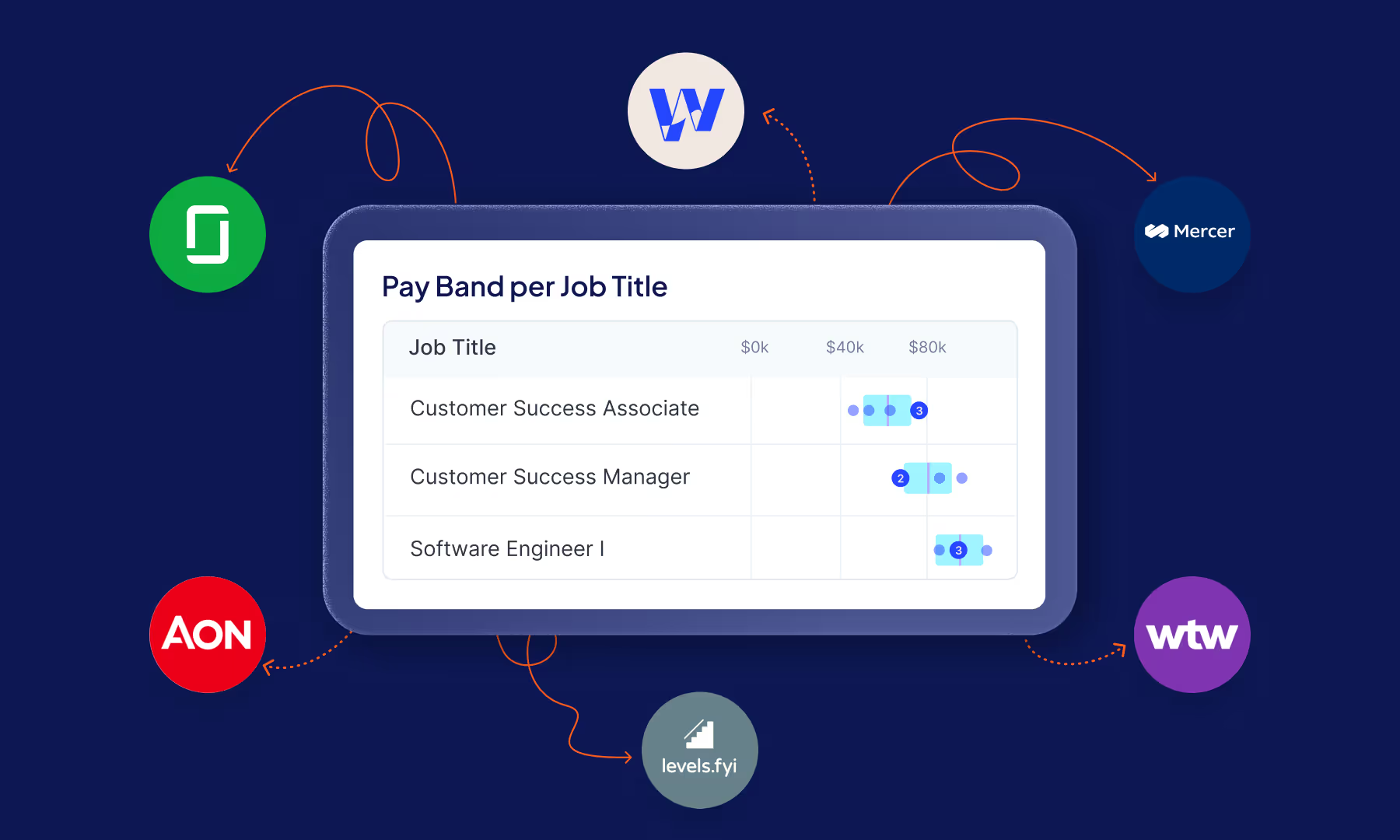
Pay ranges in postings are easiest when they’re tied to real pay bands—not one-off numbers negotiated per role.
Workleap Compensation helps you create and maintain pay bands (including employee distribution visibility) as a consistent source of truth.
2) Account for location with pay zones (if you hire across regions)
If you hire across Canada (or globally), the most common question is: “Is pay different by location?”
Workleap Compensation supports pay bands structured into geographic pay zones, so you can maintain consistency while still reflecting market realities.
3) Run a pay equity check before you publish anything
Posting ranges creates a spotlight. If you have unexplained inconsistencies, they’ll surface fast.
Workleap Compensation includes pay equity visualization across factors like gender, department, and location, and helps you monitor gaps before/during/after cycles—so you can move from reactive to proactive.
4) Make budgets and guardrails non-negotiable
Pay transparency without internal governance turns into chaos (“everyone gets adjusted to the top of the range”).
Workleap Compensation builds in clear budgets, configurable guidelines, and proactive flags to help keep decisions within spend limits—giving Finance confidence and HR control.
5) Train managers to talk about pay like humans
Managers don’t want to be compensation experts—they want clarity, guardrails, and the right language.
Workleap Compensation supports manager enablement by embedding guidelines directly into the review process, helping managers make informed decisions without guesswork.
6) Replace spreadsheet cycles with a repeatable workflow
If your process relies on “the spreadsheet person,” pay transparency will expose your operational fragility.
Workleap Compensation is designed to eliminate spreadsheet sprawl, streamline review cycles, and keep sensitive information secure with role-based access controls.
7) Decide how you’ll communicate pay bands internally
External transparency tends to raise internal expectations. The question becomes: what can we share, to whom, and when?
Workleap Compensation includes a Total Rewards Portal, and specifically supports sharing pay bands to help meet pay transparency expectations and “ensure compliance with pay regulations.”
Where Workleap Compensation fits in (and why now is the moment)
Pay transparency readiness is a comp maturity moment. You need:
- a structured foundation (bands, zones),
- defensible decisions (equity + guidelines),
- a repeatable cycle (workflows, audit readiness),
- and managers who can communicate clearly.
Workleap Compensation is built for exactly that: a configurable compensation workflow solution that helps HR and Total Rewards teams save time, control spend, and run consistent cycles—without spreadsheet overload.
It also helps you operationalize the parts that become painful under transparency: budget governance, role-based access, proactive risk flags, and clean compensation reviews end-to-end.
A simple next step: “Are we ready?” (a quick self-check)
If you answer “no” to two or more, you likely need to shore up your comp foundation before transparency becomes a scramble:
- Do we have pay bands for most roles?
- Can we explain how someone lands in a band (and moves through it)?
- Can we spot and address pay gaps before they become trust issues?
- Do managers have guardrails and language for comp conversations?
- Can we run a comp cycle without risky spreadsheet sharing?
- Can we share pay bands (or ranges) in a controlled, consistent way?
If Ontario’s 2026 requirements (or B.C.’s current rules) have you rethinking how you manage pay bands and compensation cycles, Workleap Compensation can help you get audit-ready—without adding complexity. Book a demo to learn more.



.png)


%202%20(1).png)
.png)