Employee incentive plans: Reward and motivate your team

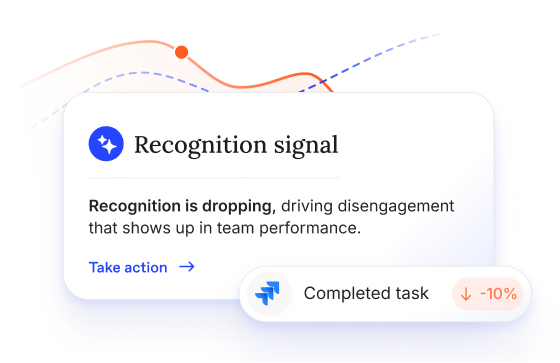

When your team doesn’t feel recognized, engagement drops, productivity suffers, and turnover spikes. It’s why many companies provide financial awards or extra time off for a job well done.
But if you’re offering incentives without a strategy, you risk employees not drawing a connection between effort and reward. When done right, an effective program shows your team that great work gets noticed.
In this article, you’ll learn how to build a fair, transparent, and sustainable employee incentive plan that works.
What is an employee incentive program?
An employee incentive plan is a strategy designed to reward employees for their accomplishments. Think of it as a way to connect individual performance to company goals, answering the “What’s in it for me?” question.
While the promise of payday is enough to encourage most employees to turn up and do the job, people often need something more to really excel. Incentives boost productivity by showing people that there’s a tangible reward on offer if they consistently work at their best. On the other hand, failing to recognize greatness can leave employees feeling undervalued, leading to decreased morale and higher turnover.
Great plans, especially employee incentive programs for small businesses, are built on fairness. That’s why Workleap Compensation is designed to help you maintain consistency and equity, giving every employee a clear view of their total rewards, pay, and benefits.
Employee incentive program examples
Not everyone is driven by the same thing. The best employee incentive programs mix different types of rewards to appeal to a diverse workforce.
Monetary incentives
Monetary rewards are the most typical type of incentive. When people hear “bonus,” they usually think of a bump in their pay or a salary raise.
Examples include:
- Performance bonuses: financial bonuses after hitting a sales target or completing a challenging project on-time
- Profit sharing: distributing a portion of the company’s profits among employees after a successful period of business
- Spot bonuses: small, immediate cash rewards for exceptional work on specific tasks
Non-monetary incentives
Sometimes, the most powerful rewards aren’t about money. Typically, non-monetary incentives focus on employee recognition, flexibility, and growth.
Examples include:
- Public recognition: an acknowledgment of great work in a team meeting or company-wide email
- Flexible work arrangements: offering remote working options or flexible hours
- Professional development opportunities: reimbursement for courses, certifications, or tuition
Experiential rewards
Experiential rewards are about offering a non-monetary reward that workers will enjoy. They can be something widely enjoyed by all, or highly personal to a specific employee.
Examples include:
- Team outings: company-sponsored lunches, fun offsite activities, or team-wide tickets to a local event
- Extra paid time off (PTO): one or several additional days of paid leave
- Wellness programs: subsidies for physical and mental wellness initiatives like gym memberships or private counselling
How to implement an employee incentive plan
The goal of an effective incentive program should be to create a reward system that feels fair, transparent, and achievable. Here’s a step-by-step guide with examples:
1. Define your goals
Before worrying about what might motivate your employees, think about the business problem you are trying to solve through an incentive plan. This could be reducing turnover or boosting sales.
These goals will determine both the kind of incentives you offer and the accomplishments you reward. For example, if your goal is to increase customer satisfaction scores, you might consider a year-end cash bonus for support team members who earn 95%+ five-star scores.
2. Set a realistic budget
Your budget determines the scale and type of your incentives. Be clear about what you can afford. A small, well-executed program is better than a large, underfunded one. Be sure to consider both the cost of the reward and any accompanying administrative costs.
3. Choose your incentives
Your workforce is diverse, and so are their motivations. That’s why a one-size-fits-all approach to employee incentives is tricky to implement. For instance, a junior employee might value cash compensation, while a senior might prefer additional PTO. Use a mix of monetary, non-monetary, and experiential rewards to appeal to as many people as possible.
4. Establish clear, fair criteria
The rules about who can earn an incentive and when should be simple, transparent, and achievable. Every employee should know exactly what they need to do to earn a reward. Try to opt for measurable metrics and avoid subjective criteria like “hard work” that can lead to perceptions of favoritism.
Workleap Compensation makes managing this criteria easy by storing all information about rewards, pay, and benefits in one central location.
5. Communicate the program clearly
When it’s time to launch your program, do so with a clear announcement. Explain the rewards, why you’re offering them, and any accompanying rules. Make sure you share the news on multiple channels, like email, Slack, and Teams, so all employees are aware and everyone has the chance to ask questions.
6. Track, measure, and adjust
Frequently review your plan to check that you’re seeing the desired results. If something’s not working, consider sending a pulse survey to uncover how employees feel about incentives and identify areas for improvement.
Best practices for employee incentive plans
Here are the most important best practices and mistakes to avoid when creating an employee incentive program.
Keep it simple and transparent
Overcomplicated programs are much tougher to engage with. If an employee needs a manual to understand how to earn an incentive, they’ll tune out. Everyone should be able to understand what they need to do, how managers track progress, and when they’ll receive a reward.
Deliver prompt rewards
Immediate recognition reinforces the behavior you want to see more of. If someone has to wait around for a couple of weeks to receive a reward, they might start thinking the effort wasn’t worth the payout. The closer the prize is to the achievement, the stronger the connection and engagement.
Personalize incentives
Not all employees will want the same thing. For example, a new parent might value extra PTO more than a cash bonus, or a career-focused employee might prefer a professional development opportunity. If you’re not sure, the best way to find out is to ask the employee. When you personalize your rewards, you show people you view them as individuals rather than cogs in a machine.
Separate incentives from base pay
Instead of being something employees come to expect, incentives should be a bonus to reward excellence. Employees know the difference between a fair salary and a company trying to distract them with gift cards. If your base compensation isn’t competitive, no amount of perks will fix the problem.
Get feedback and iterate
Rather than setting and forgetting your incentive plan, regularly ask employees how they feel about it. Find out which rewards they actually value and whether anything feels unfair or confusing. Use surveys, one-on-ones, and anonymous feedback channels to gather input, then adjust. The best incentive programs evolve based on what’s working and what’s not.
Turn rewards into results with Workleap
Workleap Compensation helps you streamline your entire employee incentive workflow, eliminating spreadsheet overload and giving managers the clarity they need to reward people fairly. Its easy-to-use dashboard also tracks pay and benefits alongside any earned rewards, helping you plan your entire compensation strategy.
With Workleap, you can provide every employee with a clear view of their total rewards while ensuring pay transparency and empowering managers with the data they need to have meaningful compensation conversations.
Demo Workleap Compensation today to see how you can boost engagement, retention, and performance with a robust employee incentive plan.
FAQs
What is a key employee incentive plan?
A key employee incentive plan (KEIP) is a program designed to boost the morale of high-value employees who are critical to the company’s success. These plans often include long-term incentives like stock options, deferred compensation, or phantom stock earned over several years.
How often should I incentivize my employees?
This depends on the behavior you want to encourage. A mix of frequent, small rewards and less frequent, larger rewards is often a good strategy. For example, you could offer regular spot bonuses for exceptional work alongside profit sharing, stock options, or larger bonuses tied to company performance.
What are the 3 types of employee incentives?
The three types of employee incentives are monetary rewards, non-monetary rewards, and experiential rewards. Each serves a different function, and the best approach is to build a strategy that incorporates all three.

%202%20(1).png)




.avif)


.png)