A guide to pay-for-performance models


Pay-for-performance (P4P) models share a common goal: connecting employee compensation to overall results. These strategies reward your staff for driving positive business outcomes and hitting organizational goals. When done right, P4P models improve employee performance and motivate teams to reach business goals.
In this guide, we’ll go over the most common P4P models and explain how to implement them.
What’s pay for performance, and how does it work?
PFP stands for pay-for-performance, a compensation strategy that focuses on financially rewarding your team members based on individual and group output. These extra incentives are in addition to your staff’s existing, fixed base salaries. Since PFP isn’t a guarantee and is based on performance, it’s sometimes referred to as variable or at-risk pay.
Here’s how the process works:
- Set goals: Define measurable targets tied to your company’s priorities. If your goal is to increase revenue, you may outline a specific amount for your team to sell by the end of the month. Clearly detail what success looks like and the timeline for achieving it.
- Define rewards: Before every month, decide how your bonuses will be calculated. For instance, if your team worked together to meet a company-wide goal, you may offer each individual of that team a $500 bonus. Set these figures upfront to keep things clear, achievable, and fair.
- Measure performance: Track progress and how employees are moving toward the goal throughout the month. Managers can use performance reviews and weekly check-in meetings to follow up on KPIs, like number of sales or increasing revenue.
- Calculate rewards: At the end of the period, apply your previously established bonus structure. Calculate payouts based on the agreed commission or bonus terms.
- Pay your people: Be sure to provide rewards promptly. Payouts that are timely reinforce trust in your compensation program, creating better motivation and morale.
Benefits of performance-based pay
By design, P4P models aim to benefit both employers and employees. Here’s how:
- Boosting motivation: Tying rewards directly to achievements gives teams a reason to push harder and reach goals ahead of time.
- Driving productivity: Employees who know their work impacts their paycheck are more productive. When team members are constantly looking for ways to improve their work performance and earnings, your company culture is positively impacted.
- Attracting and retaining talent: Including P4P in your job postings can attract more qualified talent. Rewarding existing teams for their hard work encourages them to stay, showing you value their contributions.
- Creating alignment: P4P ties an individual’s performance goals to company objectives. When employees see how their individual tasks link to overarching company goals, it fuels motivation and promotes better time management.
5 pay-for-performance models to implement at work
Here are five of the most common structures and when to use them.
1. Commissions
Commissions tie pay directly to the sales or revenue an employee generates. For example, employees earn a percentage of each sale they bring in. This means your top performers can significantly boost their pay.
This P4P model rewards individual and, in some cases, team hustle. For example, a sales rep may earn a 5-10% commission for each deal they close. In customer success, a team may receive a bonus for hitting retention targets. By tying pay directly to measurable outcomes, P4P encourages performance in roles that directly impact revenue and growth.
2. Bonuses
Bonuses are lump-sum rewards given to employees when they meet or exceed a specific performance goal. Companies usually tie these payments to individual achievements or company-wide metrics.
There are two main kinds:
- Discretionary bonuses, also called spot bonuses, are unplanned rewards for exceptional work.
- Nondiscretionary bonuses connect to preset objectives. Leaders choose important metrics in advance and offer specific rewards for reaching those goals.
3. Merit increases
Merit raises increase an employee’s base salary when they perform well. Often, leaders cover these changes during pay discussions in performance reviews.
These pay adjustments are made when employees meet or exceed pre-determined goals or criteria, like an increase in customer engagement or a high volume of sales. Organizations who use this model as part of their compensation strategy may experience a more productive workplace.
4. Profit-sharing
Profit-sharing is a P4P model that spreads your company’s earnings across teams. When your business hits its financial targets, your employees enjoy a share of the profits. Typically, companies offer rewards in the form of stocks, shares, and investment account contributions.
Ultimately, profit-sharing plans share the same goal: motivate current employees to reach company goals, retain highly skilled employees, and attract top talent in the market. With a profit sharing program, organizations provide employees with a sense of ownership and partnership within the company.
5. Stock options
Stock options give employees the option to buy company shares at a fixed price after a set period of time. If your company performs well and the stock price rises, your employees can directly benefit from the increase. Since stock prices directly reflect a company’s performance, this method ties employees’ financial perks to organizational success. As individual work contributions help the company grow, the value of those stock options grow, too.
You’ll likely see this compensation model in startups and smaller companies, as it encourages staff to think like the owners and be more invested in the ongoing success of the business.
Manage pay-for-performance seamlessly with Workleap
Once you build a strong compensation strategy, you need to implement and manage it. If you want to do this without a bunch of spreadsheets, try Workleap Compensation.
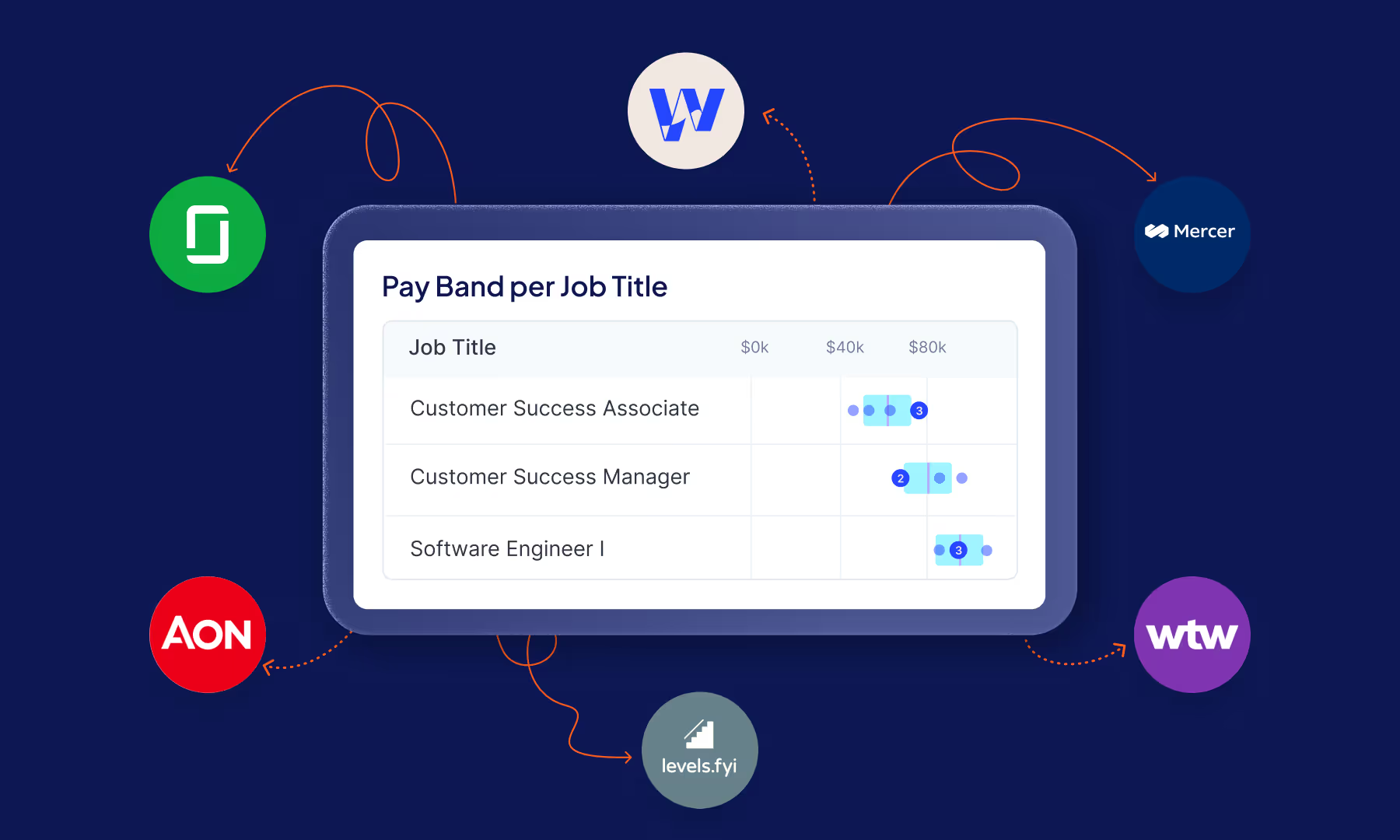
Our platform helps you keep track of pay alignment and employee performance, giving teams a single place for structuring compensation plans, managing performance metrics, and adjusting salary bands. Compensation decisions become easier with performance data, market benchmarks, and internal metrics living inside one centralized location.
Request a demo today to find out how Workleap can benefit your team.
FAQs
What are the three Ps of compensation?
The three Ps is a compensation management framework. The different Ps stand for:
- Pay for position involves paying a team member based on the role’s responsibilities and market value.
- Pay for person means you base an employee’s pay on their individual skills, experience, and qualifications.
- Pay for performance compensates a team member according to their productivity or results.
What’s a performance pay increase?
A performance pay increase, also referred to as a raise or merit increase, happens when an employer permanently boosts an employee’s hourly wage or base salary. Employers base this pay bump on performance, like meeting specific goals or achieving new organizational standards.
Is pay-for-performance good or bad?
All compensation models have pros and cons, each acting as its own strategic tool. P4P is often associated with better employee productivity and motivation, creating a loop where increased performance leads to higher pay.
What’s pay compression?
Pay compression refers to employees earning the same or similar salaries regardless of their seniority or skills. This means that new hires and longstanding team members might receive the same pay.
This usually happens as a result of things like market demand and minimum wage hikes. Keep an eye on this, as pay compression issues can lead to higher turnover and lower morale.

%202%20(1).png)


.png)

.png)