How to fix pay compression: Top solutions
.png)

Tenured employees notice when a new hire earns the same as (or more than) them. This is called pay compression, and it doesn’t come from one bad decision. It builds gradually as companies adjust starting salary expectations, delay raises, and rely on outdated range data. Those inconsistencies impact employee morale and turnover.
Once you notice this issue, you need to correct the gaps. Otherwise, you risk losing your best people. In this article, we’ll explore how to fix pay compression and what causes it most often.
What’s pay compression?
Pay compression — also known as salary compression or wage compression — happens when employees with different levels of experience or tenure receive similar salaries.
It usually appears in two forms:
- Horizontal wage compression means employees in the same position are paid nearly the same despite differences in tenure.
- Vertical wage compression refers to workers at different organizational levels making a similar amount.
The effects of pay compression
Compensation is one of the clearest signals of value in a workplace. When employees see inconsistencies, they start questioning fairness. That weakens employee morale and creates doubt about whether the organization is willing to compensate fairly for experience and performance.
The impact shows up quickly:
- Managers struggle to justify compensation decisions to direct reports.
- Internal pay range structures lose credibility.
- Experienced employees feel undervalued and may leave.
- Long-term turnover increases.
What causes pay compression?
Pay compression is driven by patterns tied to the labor market and internal decision-making. Here are a few reasons this issue occurs.
State minimum wage increases
While the federal minimum wage hasn’t changed since 2009, individual states have their own regulations surrounding base pay. On average, states revisit these rates once a year.
The reason these shifts cause pay inequity is it may put new hires on a similar level as experienced employees. Say your state’s minimum wage is $12 an hour, and your most tenured team member makes $15 an hour. If the state raises the minimum wage to $15 an hour, suddenly an employee who just started two weeks ago will make the same amount as your worker who’s been on board for three years.
Pay inconsistency
Pay decisions need to be consistent throughout the entire organization — otherwise, managers may adjust salaries differently across teams. Over time, this creates uneven pay structures and hidden pay inequity.
Inflation impacts
Failing to account for inflation for your current employees’ pay means the value of their salary will lower. Each dollar will have less purchasing power, and not giving your team raises to compensate for this means they’re making less than they used to.
When internal pay increase cycles don’t keep pace with external salary increase trends, employees begin to fall behind compared to new recruits entering at higher rates. This widens gaps in base pay.
Talent demand
In a tight labor market, companies may need to offer higher salaries to secure talent. If these offers outpace internal raise structures, they can unintentionally create employee pay inconsistencies.
Warning signs of pay compression
Here are some of the most common indicators of pay compression:
- Tenured employees earning similar pay to new hires
- Starting salaries increasing faster than internal pay increases
- Leaders having difficulty defining whether pay changes are based on experience, performance, or tenure
- Frequent employee questions about compensation fairness
- Misalignment between salary ranges and actual compensation
- Increased turnover among experienced employees
- Declining morale tied to pay concerns
When several of these signs appear at once, the impact becomes harder to ignore. Managers face more pressure to justify pay decisions. Employees start comparing salaries more openly. And trust in the compensation system weakens, making retention more difficult and forcing organizations into reactive fixes.
How to fix salary compression
Preventing and addressing pay compression requires a structured approach. Below are a few steps your organization can take.
Regularly check market conditions and audit salaries
Consistent benchmarking helps salary ranges reflect current industry trends. But benchmarking alone isn’t enough — leaders need to apply these changes across the board.
Say you gather new market data and realize you’re underpaying managers by $5,000 a year. Offer a bonus to correct this quickly, then reevaluate their salaries for the next fiscal year. Many HR teams use a salary compression calculator to measure pay gaps and identify inconsistencies across roles. Doing so means your current employees are paid well, and you can confidently hire new workers at the correct market rate.
Balance internal equity with external competitiveness
Organizations need to stay aligned with the labor market while maintaining fair pay range structures internally. If companies prioritize external hiring needs, they may increase offers for a new hire without adjusting internal salaries. This creates visible gaps between new and existing employees. On the other hand, focusing only on internal alignment can make it harder to attract talent, especially in a tight labor market where candidates expect competitive offers.
The solution is a strong compensation strategy that accounts for both external market rate data and internal pay equity across roles. This allows organizations to make informed decisions about when to raise salaries, when to adjust ranges, and how to maintain consistency across the workforce.
Address pay inequities
When you notice pay compression, correct it right away. This often means adjusting salaries for tenured employees who’ve fallen behind. While these changes require an up-front investment, delaying them tends to increase turnover costs and disengagement.
Offering non-monetary rewards
Compensation isn’t limited to salary. Additional benefits and flexibility can level the playing field. The key is consistency: Organizations that apply compensation guidelines consistently are better positioned to maintain pay equity and avoid recurring compression.
Turn pay compression insights into action with Workleap
Pay compression compounds, making early action critical. Organizations that manage it well put structures in place to make clear, defensible pay decisions across the workplace.
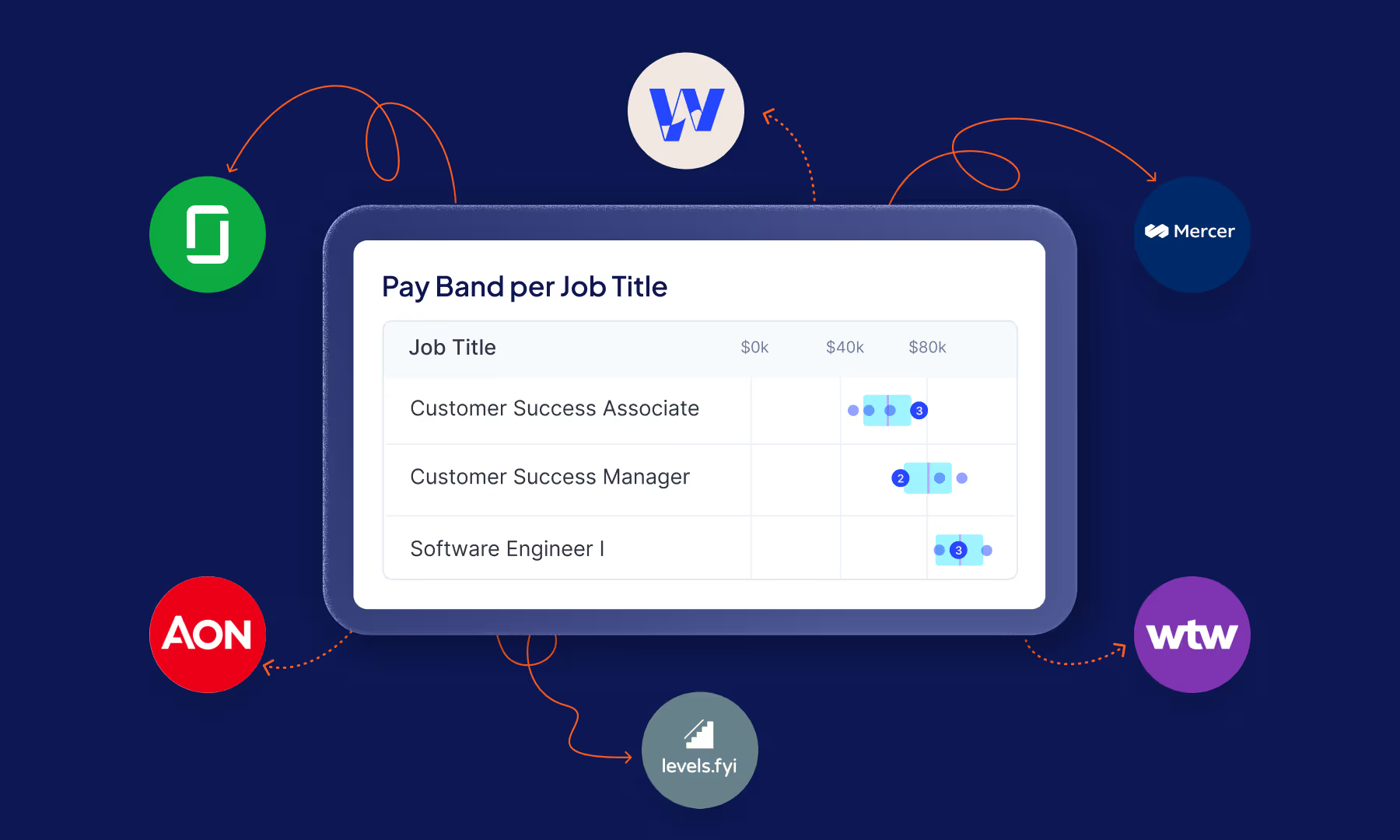
Workleap Compensation supports this by centralizing compensation data, automating review cycles, and giving managers clear visibility into pay decisions. Instead of relying on disconnected spreadsheets, teams can manage compensation through a system designed for accuracy and alignment. Benchmarking and pay band features are built-in, so there’s no second guessing about whether salaries match industry and internal standards.
Ready to fix your pay structures? Book a demo today to see how Workleap can help.
FAQ
What’s the formula for pay compression?
The pay compression formula is as follows:
(New hire salary − Tenured employee salary) / Tenured employee salary = Pay compression percentage
A smaller percentage signals higher compression.
What are the 3 Ps of compensation?
The three Ps of compensation are:
- Pay for position
- Pay for person
- Pay for performance
A solid compensation strategy balances each. Salaries should compensate employees properly for the role, their experience, and their output.
Is salary compression illegal?
Salary compression isn’t illegal, but it can create legal risk if the discrepancy is related to a protected characteristic, like race, gender, or age.

%202%20(1).png)


.png)