
What’s a compensation survey? A practical guide


Set salaries too low and you lose your best people to competitors. Set them too high and other priorities take the hit. Either way, you're stuck with recruiter fees, lost productivity, and the months it takes to hire, onboard, and train someone new.
Compensation surveys solve this problem by giving you real-world data so you can benchmark pay with confidence instead of gut feel. In this guide, we’ll break down what a compensation survey is, how to run a compensation analysis, and how to turn the results into smarter, more equitable pay decisions.
What’s the purpose of compensation surveys?
A compensation survey, sometimes referred to as a compensation study, is a diagnostic tool that shows what the market is paying for a specific role. It pulls together pay data from multiple companies to compare compensation across similar jobs—typically base salary, bonuses, and benefits.
The goal of a salary survey is to give you the data to answer these questions:
- Are you paying competitively? Pay surveys show how your salaries stack up against the market. When you pay according to market rate, you’ll have happier, more productive employees.
- Are employees likely to turn over or stay based on compensation? While it’s impossible to predict employee turnover, your compensation package (including benefits) is one of the few variables you can control.
- Where are your hidden pay equity gaps? A survey can show disparities between genders, races, or departments that fly under the radar.
- What should you budget for raises? Allocating room for merit-based increases helps you recognize top performers and keep them engaged without stretching salary spend beyond your means.
With answers to these questions, you can build an employee compensation philosophy that’s fair, defensible, and aligned with your growth.
What are the benefits of using compensation surveys?
Conducting a salary survey changes how you make pay decisions. Here's what that looks like:
- You improve retention without spending more: Fair pay keeps your best people focused on their work. You spend less time backfilling roles and more time expanding your team.
- You build a defensible pay structure: When an employee asks about their compensation, you have an answer backed by data.
- You stop losing candidates to pay: Many jobs are lost in the final offer and negotiation stage. With market data, you make offers that get accepted at higher rates.
How to conduct a salary survey
There are two ways to get salary data: buy it or build it. Depending on the size of your company, you can either choose one or a mix of both. This compensation benchmarking allows you to determine fair market rates and ensure better pay equality.
Option 1: Buy existing survey data (fastest, most common)
Buying existing data is a good place to start. Here’s how:
Step 1: Choose your survey provider
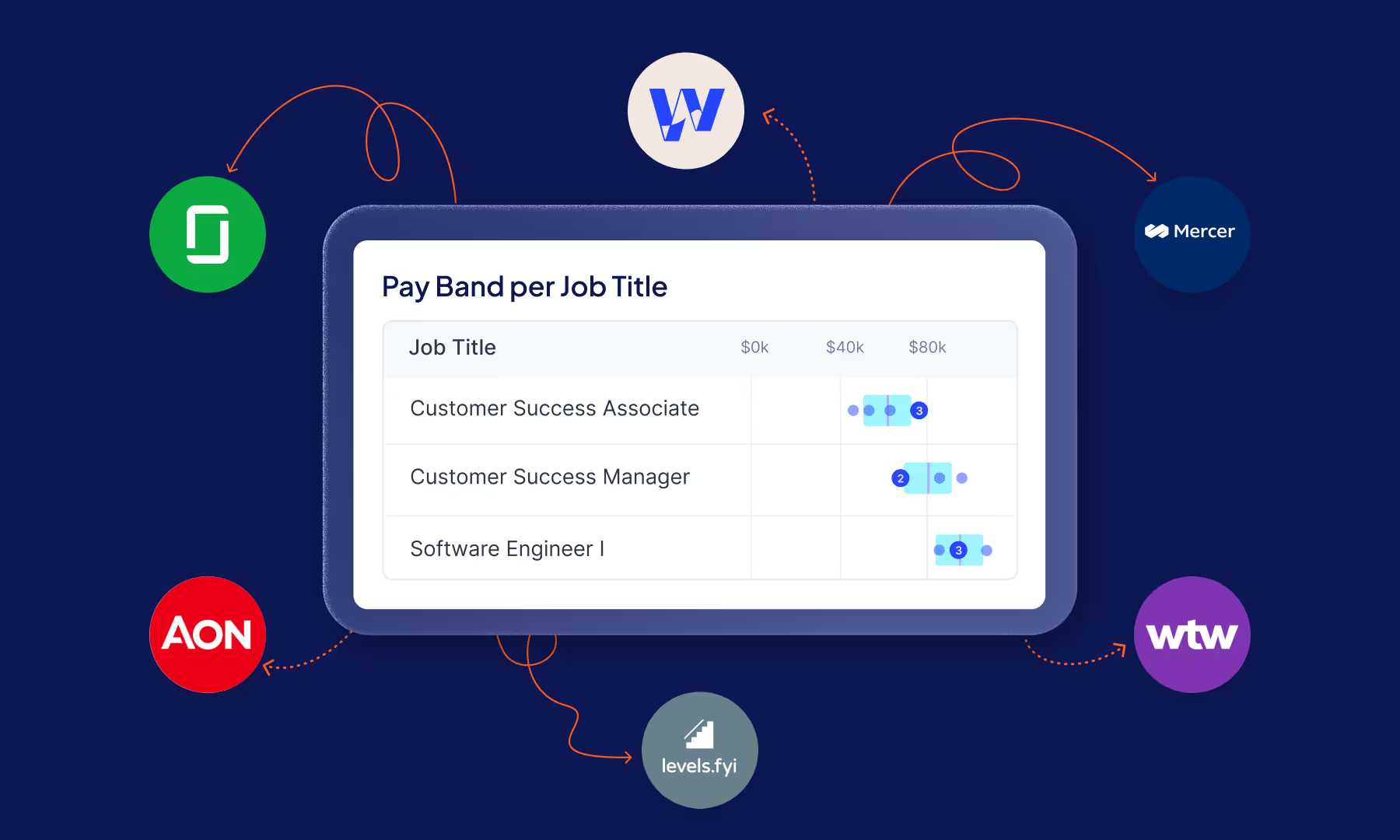
The most common companies are Mercer, Payscale, Salary.com, and the Bureau of Labor Statistics (BLS). Each has different coverage, industries, and price points.
Mercer and Payscale are the most comprehensive for mid-to-large-sized companies. BLS is free, but less detailed. Be sure to choose based on your scope.
Workleap Compensation uses Mercer for its benchmarking, allowing you to incorporate trusted insights directly into your workflow.
Step 2: Define your scope
To limit the amount of data needed, focus on positions that matter, like high-turnover roles, hard-to-fill roles, and roles that generally drive business.
You can define your scope with this criteria:
- Geography: Consider if you are hiring locally, regionally, or nationally in relation to where your company is based. A senior engineer in San Francisco will earn more than one in Des Moines, Iowa.
- Company size: A startup pays differently than a Fortune 500. Find a comparable peer group that matches your size.
- Industry: On average, tech and finance will pay more than manufacturing. Choose data that applies to your company’s industry.
Step 3: Pull the data and analyze
Most survey providers will give you a dashboard where you can see info like the market median, 25th and 75th percentiles, and the total compensation mix. For this step, it’s crucial to know your own budget so you’re able to factor in raises at a standard rate.
If you want to attract top talent, you’ll need to look at your budget and determine what you can offer versus what ROI you’ll get back. When you have the right data, it simplifies your decision-making process.
Step 4: Compare to your current pay
Lastly, line up your actual salaries against the market data. Identify if you’re above, below, or right on target. And if you’re below, you might want to look at the likelihood of your employees leaving.
Option 2: Conduct your own survey (more work, more specific)
If you need hyper-specific data, like unique roles or niche industries, building your own survey may be beneficial.
Step 1: Identify your peer companies
Ask yourself who you’re competing with for talent. If you’re operating a fintech startup in Austin, your peers might be other fintech and tech companies both locally and globally. Make a list of ideally 10–20+ peer companies.
Step 2: Design your survey
Next, design a simple survey asking for:
- Job title and description
- Base salary range
- Bonus structure
- Benefits (health insurance, 401k match, PTO, etc.)
- Years of experience required
- Location
Keep it short and to the point to encourage responses.
Step 3: Send it out and analyze
Email your salary survey to your peer companies’ HR leaders. Make sure you offer to share results in exchange for participation. Once you get the results, put them into a spreadsheet to analyze your custom market data.
Use survey results to optimize your compensation strategy
Don’t let your survey data sit in a spreadsheet. Instead, use it to:
- Create compensation ranges for each role: Your pay ranges (aka pay bands) should be wide enough to account for experience but narrow enough to be defensible. Avoid common compensation mistakes like failing to account for internal raises or setting bands too wide
- Make raise decisions: When someone asks for a raise, pull the data. For instance, if they’re earning $155k and the market median is $160k, they’ve got negotiating power, and they know it. Pay transparency helps get ahead of that tension by building trust and showing employees how compensation decisions are made.
- Plan your budget: You’ll know your pay gaps if you’re up to date on market rates and current pay. If you’re 5% below market across all employees, you’ll need to budget 5% for raises to stay competitive.
Turn compensation insights into action with Workleap
Employee surveys are the foundation of a fair, competitive compensation strategy. Knowing what the market pays is important, but what really drives ROI is how your organization adjusts compensation, fixes pay gaps, and communicates decisions.
Workleap Compensation helps you turn that data into action. Instead of spending time in spreadsheets, you can integrate market data directly into your workflows. Benchmark roles, run equity analyses (like internal versus external equity), and make fair pay decisions all in one place.
Request a demo today to see how Workleap connects your data to your decisions.
FAQs
How much does a compensation survey cost?
The cost of compensation surveys varies, with some free options easily accessed from public sources. Paid services can range from a few thousand dollars for a subscription to tens of thousands for a custom survey from a major firm.
How are compensation surveys designed?
Custom employee compensation surveys are created for your specific location, industry, and roles. Other compensation sites organize data based on these factors, often giving you access to accurate insights.
What are the top salary survey providers?
For large enterprises, providers like Mercer, Willis Towers Watson, and Korn Ferry are common for surveys. For tech and startups, Payscale and Pave are popular choices. The right provider depends on your industry, size, and budget.






.png)

.png)
%202%20(1).png)
.png)