
Compensation trends: What HR teams must know


From HR managers to job applicants, everyone knows that compensation trends are hard to keep up with. Pay transparency laws have outpaced internal structures. Last year’s salary benchmarks don’t work for high-demand roles. And in performance reviews, employees have new salary ranges in hand before the meeting even starts.
Here’s a practical breakdown of the pay trends that matter most. Plus, learn how to build a compensation strategy that holds its ground.
Latest trends in compensation to watch
Traditional compensation models are static by design, with fixed job titles, once-a-year reviews, and internal salary tables built on what the organization paid last year instead of what the market pays today.
This structure used to work, but things move fast. That’s why modern compensation strategies flip this logic. Pay has become a live variable, tied to real-time benchmarks and connected to skills and performance.
Here’s how recent trends are affecting the market, including pay transparency, market-driven adjustments for high-demand roles, and the change from annual to continuous benchmarking. Keep in mind that there’s more out there than what’s listed below, and these are just the most important shifts.
Pay transparency and disclosure expectations
Roughly 15 U.S. states now require posted salary ranges, and the EU Pay Transparency Directive mandates employer reporting on pay gaps in 2026. This legal pressure matters — but even without it, prospective employees are already looking for pay ranges, and failing to include those numbers would mean losing out on key candidates.
An unclear salary range, or one that doesn’t match the market, could cost you an entire cohort of prospects. Even if your state or country doesn’t mandate pay transparency, including it in job postings is now best practice.
Market-driven pay adjustments
Average salary budget growth doesn’t tell the whole story. It’s an average across every role, industry, and geography, and outliers can skew that number. Instead, search for role-specific averages that detail pay bands for your specific market and location. For example, in-demand roles like AI engineers and senior cybersecurity professionals could command huge premiums above standard pay bands — and the average across all jobs wouldn’t show that.
The roles quietly pulling ahead aren’t always obvious. A job title that looked fine last year can become uncompetitive mid-year, and another could skyrocket into high demand (and high compensation) at the same time. Market repricing doesn’t wait. Stay ahead by keeping up to date with salary fluctuations.
Equity and fairness emphasis
Pay equity has moved well past the manual spreadsheet phase. Modern audit tools account for legitimate pay differentials, such as role level, geography, and tenure, and flag gaps that those factors don’t explain. What’s left either has a defensible rationale, or it doesn’t. Regulators want to see that analysis, and increasingly, so do employees.
The reality is that it’s hard to build a benchmarking cadence based on the above factors. But everyone deserves fair pay, and you need to set your system — and your employees — up for success.
Total rewards emphasis
Employee benefits trends like flexible work arrangements, mental health support, and generous parental leave policies are no longer differentiators. For a lot of candidates, they’re baseline expectations, and they should be clear in every job posting.
List out your benefits in every job posting, but also communicate total rewards as a single, legible number. Employees shouldn’t have to piece it together themselves.
Flexible and individualized compensation
A 28-year-old carrying student loans and a 55-year-old maxing out their retirement contributions don’t need the same benefits package. Flexible benefits pools, where employees direct a set annual dollar amount across a menu of options, solve this by letting people build a plan that actually fits their needs.
While this adds administrative complexity, it’s worth it to meet people where they’re at. You might even see higher perceived value per benefits dollar spent, because that money is going toward things employees genuinely use.
Technology and data-driven pay decisions
Live benchmarking platforms tell you what comparable companies are paying in your industry, geography, and company size band. HR teams with access to that kind of data can recalibrate pay bands quarterly rather than annually, and that frequency is quickly becoming the standard.
Integration of performance and compensation
The shift from tenure-based increases to performance-calibrated merit pay is well underway, but managing this standard is a tricky balance. If managers are handed a discretionary budget and left to their own devices, merit increases could end up reflecting who advocates the loudest, which produces unequal, unfair pay dispersion. Instead of making that mistake, create a standard that works for everyone.
How to turn compensation trends into successful pay strategies
Here’s how to translate the shifts above into a strategy that holds up:
- Audit and update your pay philosophy: There are three distinct ways to win on compensation philosophy, and the right one depends on your talent market. Write down your values and standards, make sure managers can articulate them, and revisit when the market shifts.
- Standardize job architecture and pay bands: Pay transparency isn’t the problem. Inconsistency and inequity are. Employees compare notes, and messy pay leveling is often the first thing they find. Clean criteria and documented bands let employees know you value their contributions equally.
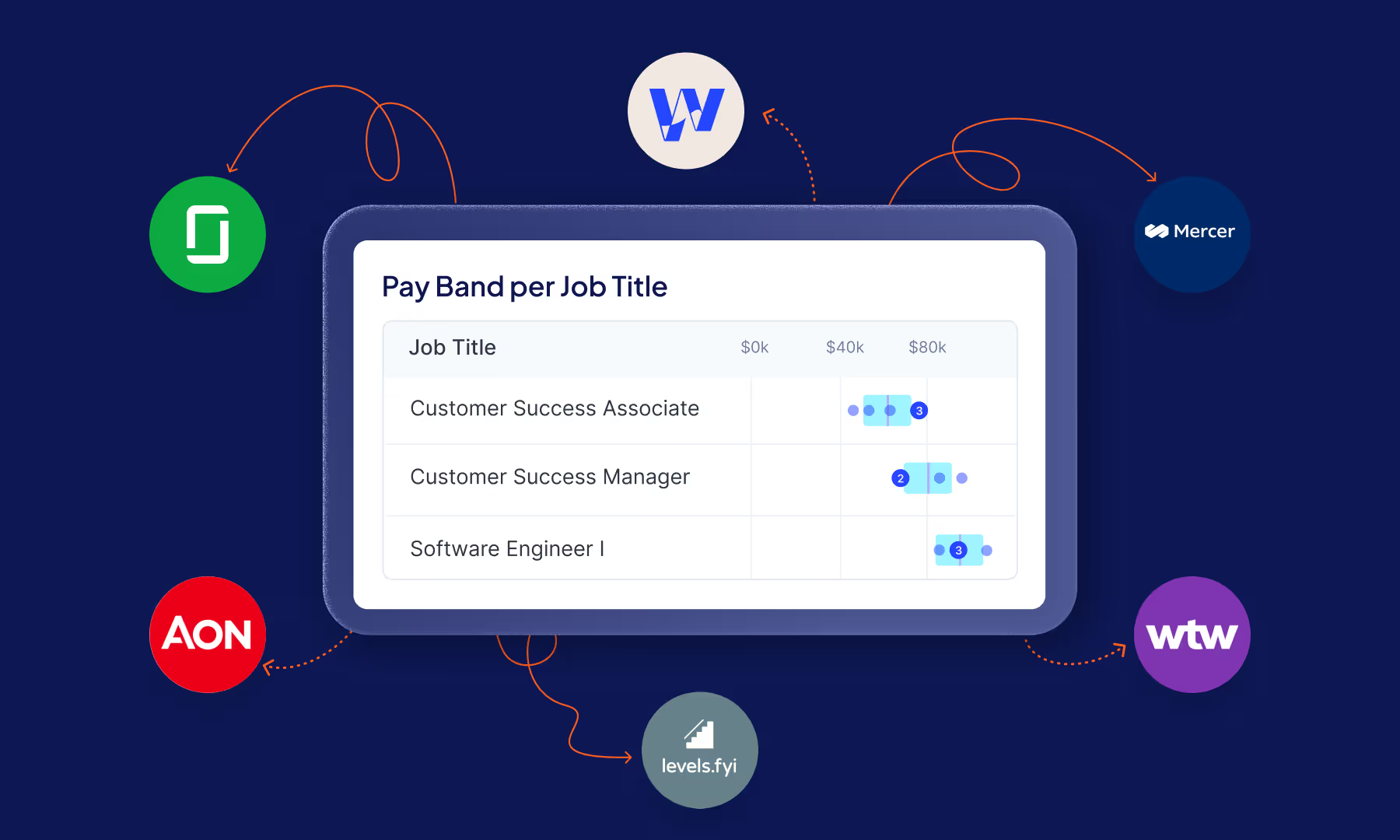
- Benchmark regularly using reliable data: Quarterly benchmarks used to sound overly ambitious, but they’re actually a great way to keep roles up to date. Pull from at least two sources, weigh them by industry and geography, and build a process that catches at-risk roles before they walk out the door.
- Monitor internal equity and fairness: Don’t run pay equity analyses because someone filed a complaint or a headline spooked leadership. Build a defined cadence that catches issues before they grow. Segment by gender, ethnicity, tenure, and manager. Document any gaps you can justify, and close the ones you can’t.
- Integrate performance with pay decisions: Managers need more than a spreadsheet and a deadline. They should understand the logic behind every decision well enough to explain it to someone who didn’t get what they expected.
- Leverage technology to automate reviews: Manual comp processes can create errors and risk overlooking important documentation. Automation cuts the version-control chaos, speeds up approvals, and gives you a paper trail that holds up.
- Communicate total rewards clearly: Don’t hand someone a PDF once a year and call it communication. Make compensation a regular conversation where employees feel empowered to speak up and feel heard.
Staying competitive with Workleap Compensation
Every trend points to the same conclusion: Compensation decisions don’t run on instinct or institutional memory. They run on data, repeatable processes, and consistent execution.
Workleap Compensation gives HR teams the infrastructure they need to effectively centralize pay bands, analyze pay equity, and automate review workflows. Instead of pulling together salary data from multiple spreadsheets before a review cycle, pay bands live in one place, updated against real-time benchmarks.
If your current process still lives in spreadsheets, 2026 is the year to get ahead. Explore Workleap Compensation and experience a better workflow.
FAQ
How often should companies revise salary bands?
Employers should revise pay bands at least annually, but that isn’t sufficient for high-demand roles. In some tech and data specialties, the market can shift meaningfully within a single quarter, often following current trends in compensation and benefits.
How does benchmarking impact compensation planning?
Without current market data, compensation tends to remain anchored to history, and history doesn’t reflect a labor market that has repriced significantly. Strong benchmarking tells you where the range sits relative to competitors, identifies specific roles where you’re losing candidates, and provides managers a credible basis for conversations about salary increases.
What are the 4 types of compensation?
The four types of compensation are base pay (fixed salary or hourly wage), variable pay (bonuses, commissions, and performance incentives), equity compensation (stock options and RSUs), and benefits (health coverage, retirement contributions, flexible time off, etc.). Most modern total rewards frameworks combine all four.




%202%20(1).png)
.png)




.png)