Continuous performance management toolkit
Use this toolkit to guide regular check-ins, provide timely feedback, and build a culture of continuous growth.
Continuous performance management toolkit to promote growth
Managers are under constant pressure to keep employees’ performance on track while also finding time to focus on their development. Performance management tools can help, but finding one that actually supports you and isn’t just an extra admin step can be tricky.
That’s why we put together the continuous performance management toolkit—a starter pack of five templates designed to help you build an effective action plan.
What is continuous performance management?
Continuous performance management is the use of regular, informal check-ins to monitor employees. Designed to replace annual reviews, the approach provides employees with clear expectations and feedback to help them develop a growth mindset.
Many organizations choose to centralize employee conversations, feedback, and goals using continuous performance management software. These platforms provide a clear view of employee progress and keep track of performance-related data, helping maintain momentum between meetings.
How to develop a continuous performance development plan
You don’t need to dramatically overhaul your HR processes to see the benefits of continuous performance management. Follow these steps to start putting a plan in place:
- Align with company goals: Before switching to continuous performance development, review your company's objectives and think about how the approach will fit into your current processes. This alignment will help managers and HR leaders understand how best to support employee progress.
- Set regular meetings: Continuous performance management replaces stressful once-yearly evaluations. Instead, focus on regular, low-pressure chats with employees about their growth.
- Share timely feedback: Outside of review meetings, be sure to share any relevant feedback with employees about their work, like after finishing a tricky report or project.
- Communicate the change: Make sure your entire team understands the switch in performance management approach to avoid any confusion.
- Use Workleap’s toolkit: Workleap’s free continuous performance management toolkit is a great starting point for building your strategy.
How do tools to improve employee performance help?
Performance management tools help you guide growth consistently and provide useful employee feedback. Here are a few ways they provide support:
- New hire check-ins: Early check-ins with new staff set expectations around their performance, helping you support employee engagement and spot any gaps in their skills or knowledge.
- Goal-setting: Performance tracking tools clarify everyone’s priorities, connect employee and company goals, and help track objectives over time.
- Career development: Career-focused conversations support long-term employee development and give you insight into their long-term growth potential.
- Performance tracking: For structured evaluations, performance management tools can summarize employee progress and provide important documentation.
- Touchpoints: Moving to regular one-on-one meetings rather than an annual review creates more space for feedback, coaching, and performance improvement.
To learn more about performance management software and tools, explore our guide.
Download to see the full Continuous Performance Management Toolkit template

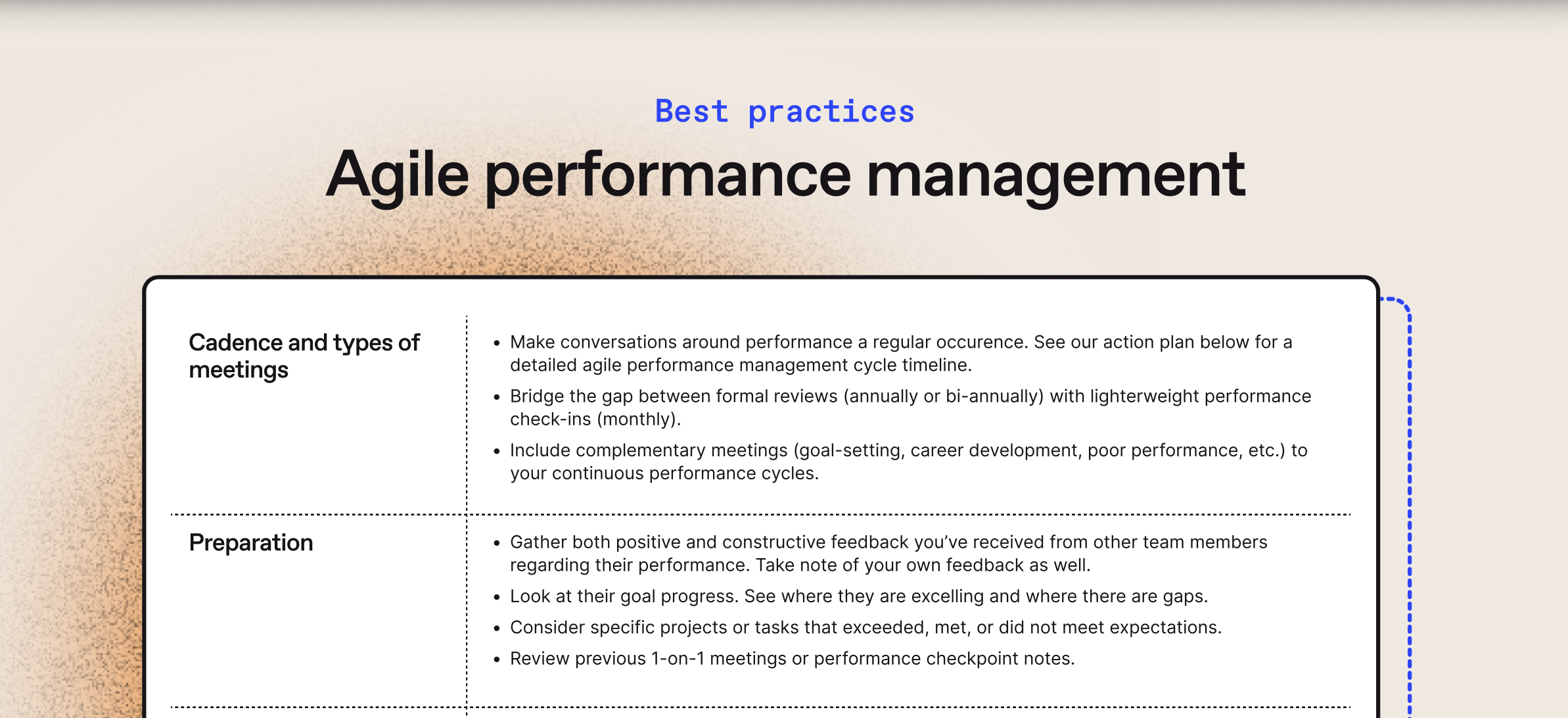

Create a culture of growth with Workleap’s free performance management toolkit
Unclear and disconnected performance reviews can leave employees feeling unsupported and confused about their development. Continuous performance management offers more opportunities for managers and HR to set expectations, provide consistent feedback, and support employee progress.
If you’re considering adopting continuous performance management, Workleap’s toolkit is a great starting point. With five templates, each designed to help you build your strategy, the toolkit is filled with information that’ll help reduce any friction from the move.
Ready to put things into motion? Click this link to download our toolkit today. And if you’re ready to take the next step, see how Workleap Performance helps guide your employees toward continuous growth.
FAQs
What are the 5 Cs of performance management?
The five Cs of performance management are designed to help you build a stronger, more human strategy. They are:
- Clarity: clear expectations around goals, priorities, and success
- Consistency: regular touchpoints instead of sporadic performance reviews
- Communication: ongoing, two-way feedback
- Coaching: manager support that drives employee development
- Continuity: ongoing dedication to growth
What are the three examples of performance management systems?
There are many different ways to manage team performance, but three of the most popular systems are:
- Goal-based systems: a focus on goal-setting and aligning employee objectives with company objectives
- 360-degree feedback: feedback from managers, peers, and, in some cases, your direct reports to create a more balanced view of competencies in a team-wide context
- Key performance indicators (KPIs): defined metrics that measure outcomes, progress, and impact over time
Workleap brings these systems together in one performance management platform.
What are the new seven management tools?
The new seven management tools are a set of planning, communication, and problem-solving techniques designed to help with complex problems, to organize ideas, and to turn strategy into action. They are:
- Affinity diagram: groups ideas into themes so you can easily spot patterns
- Interrelationship diagram: shows you how different issues influence each other
- Tree diagram: breaks big goals down into smaller steps
- Matrix diagram: maps out the relationships between different things
- Prioritization matrix: ranks your options based on their effort and impact
- Process decision program chart (PDPC): flags risks for you and helps you prepare for them
- Activity network diagram: visualizes a project’s important timelines and steps
