Employee goal setting template
Help your team turn ambitions into actionable goals that align individual performance with team and business priorities.
Employee goal-setting template to boost performance & engagement
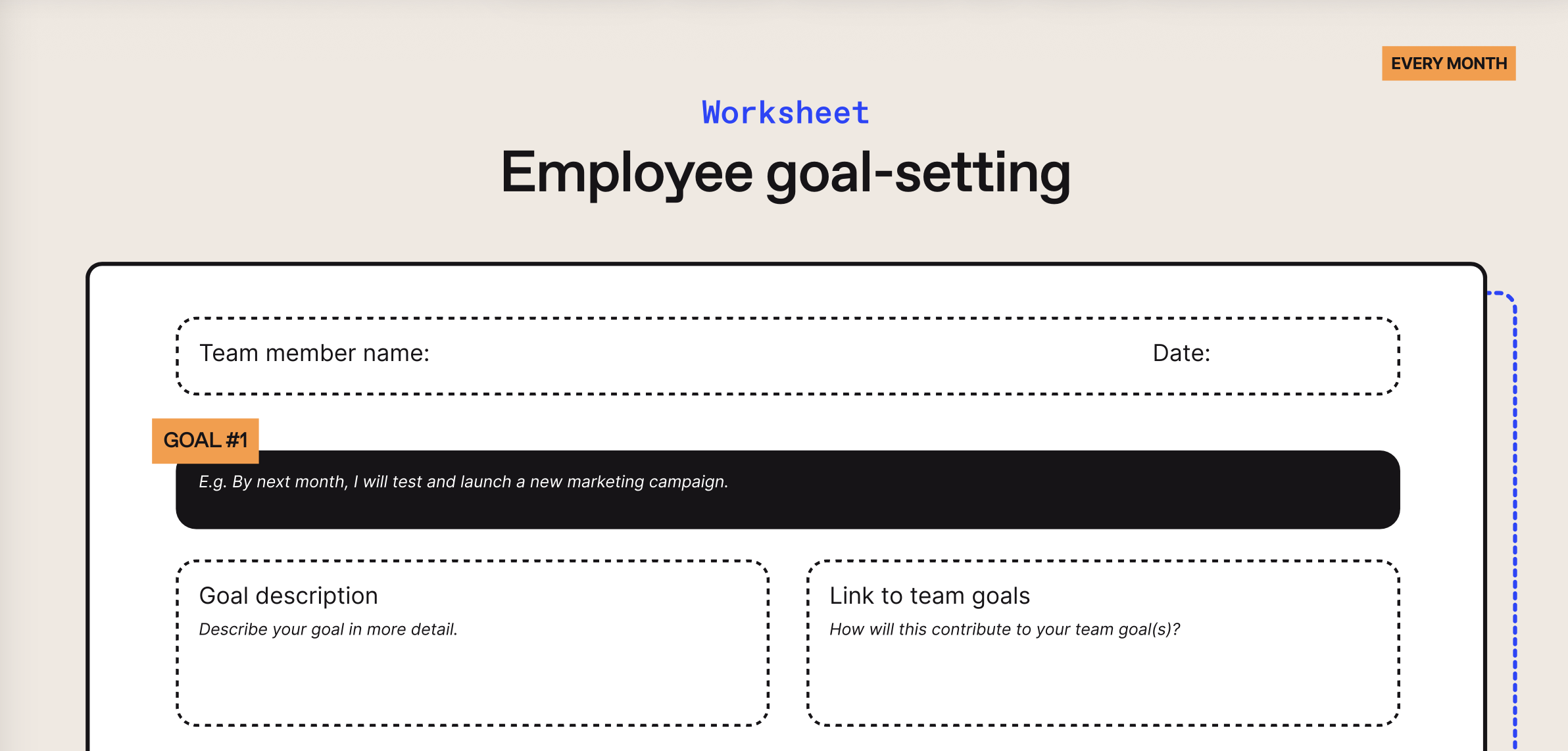
A clear sense of direction provides meaning to the work day, and one of the easiest ways to help your team figure out where they’re heading is with the Employee Goal-Setting Template for Workleap Performance.
This free, downloadable worksheet offers your managers and employees a simple way to set, track, and achieve meaningful outcomes together. Bonus: Its ready-to-use format requires no extra prep, making growth easier for everyone.
Why is employee goal setting important?
Goal setting gives your team members direction while fueling their performance; employees become more focused and motivated when they understand what success looks like in your organization. Actionable targets give employees a roadmap to follow and keeps them engaged in their work.
Setting goals also creates alignment for your employees. When an individual’s aims connect to your overall business objectives, it allows everyone to move in the same direction. This shared focus boosts accountability and makes it easy to see your progress.
How to effectively set goals for employees
Keep your employees motivated by building and adjusting goals that make sense for both the individual and the organization.
Here’s how to make the process work best:
- Use SMART goals: Make your employee’s objectives specific, measurable, attainable, relevant, and time-bound (aka SMART). This turns vague intentions into clearly defined plans that can be acted on with the help of a goal-planning template.
- Co-create with your staff: Inviting people into the creation process of personal and team aspirations gives them a sense of ownership, inspiring them to reach their targets.
- Prioritize based on impact: Focus on the employee and organizational goals that matter most, tackling them in order of importance.
- Try a goal tracker template: Use Workleap’s employee goals template to save time and keep everyone on the same page. It turns SMART objectives into real plans by guiding goal-setting conversations.
- Set milestones and check-ins: Use Workleap Performance to track your employees’ progress and your business alignment automatically.
Track and adjust as needed: Review your employees’ goals often and refine them when you or your team’s priorities shift.
Download to see the full Employee Goal Setting template

5 best practices for using goal-setting templates
Our template works best when it becomes part of how your team thinks, talks, and grows.
Here are five best practices to make that happen:
- Review regularly with your team: Check in often to keep every employee goal relevant and specific.
- Prioritize visibility: The plan you create with this template is a living document that needs frequent updates. Refer to it often to keep your team’s progress top of mind.
- Encourage feedback and discussion: Defined objectives grow and evolve when your people feel safe speaking up.
- Celebrate the achievements: Mark everyone’s wins regularly to make tracking feel worth it.
- Use the template consistently: Apply Workleap’s Employee Goal-Setting Template across your organization, giving teams a standardized and uniform approach to goal management.
Turn ambition into results with Workleap
Great goal setting shapes your organization’s performance, confidence, and growth. When your people are clear on what they’re working toward, you build momentum instead of adding another task to their checklist.
If you’re hunting for a practical starting point, Workleap’s free Employee Goal-Setting Template is available now. Download it, share it with your team, and start setting tangible targets that matter.
Pair our template with Workleap Performance to make goal tracking, coaching, and alignment even easier. Together, the outline and our platform will help you move toward results that are worth celebrating.
FAQs
When should employee goals be set?
It’s best to position goal setting at the beginning of a new project, role, or performance cycle. You can also set and revise personal and team targets when your business priorities shift or after performance reviews.
What are the 5 principles of goal setting?
These five principles of goal setting help make objectives worth chasing:
- Clarity: Make sure all intents are specific and easy to understand. Your employees should know exactly what they’re aiming for and how you’ll measure their progress.
- Challenge: Objectives should stretch your team’s capabilities while still being attainable.
- Commitment: Co-creating a list of goals with your team members helps them feel ownership and take more accountability for the outcomes.
- Feedback: Regular check-ins and goal-tracking meetings allow your staff to provide useful feedback on the process.
- Task complexity: Break more complicated ambitions down into smaller steps to make the work more manageable and less overwhelming.
How often should goals be updated?
Many teams use quarterly check-ins to revisit plans, track progress, and tweak the timelines as individual and business priorities shift. Tools like the Workleap Employee Goal-Setting Template simplify this process with easy, bite-sized questions for team members.
