The HR guide to identifying high-potential employees
.png)

How do you know if your employee is a future leader in the making?
Since traditional systems weren’t built to identify potential, HR teams are forced to rely on quarter performance reviews and fragmented feedback that provide a narrow view of someone’s productivity.
Part of the challenge isn’t just identifying high-potential employees; it’s spotting them early enough to invest in their development and training.
Let’s break down the key characteristics and practical tools for identifying high-potential employees consistently. We’ll also explore how HR teams can easily track performance trends and identify future leaders with Workleap Performance.
What’s a high-potential employee?
High-potential (HiPo) employees are individuals who demonstrate the ability and motivation to progress into more senior leadership positions. These individuals are problem solvers, easily adaptable, and respond well to setbacks. With their clear communication styles and strong interpersonal relationships, HiPos are the types of leaders organizations need.
High potential vs. high performance
While often used interchangeably, high potential and high performance are different when referring to employees.
High-performance employees excel in their current role. They’re efficient, reliable, and produce high-quality work. Many top performers choose to deepen their expertise rather than pursue leadership positions.
High-potential employees excel in their performance while also demonstrating the capacity to lead others, solve complex problems, and grow into senior roles.
Performance appraisals can help you identify high performers, but you’ll need to look at trends to spot high-potential employees. Look at how they respond to feedback, how they’re progressing, and if they’re building capabilities beyond their current role. Appraisals work best when combined with continuous feedback and performance insights.
Importance of identifying high-potential employees
When HR teams identify high-potential employees early, they can invest in their development and reduce the risk of losing key talent. Here are a few other ways identifying these team players impacts your business.
Higher retention
High-potential employees are motivated by growth, and they’re more inclined to stay when they see a future for themselves at your organization. But if there’s no path forward, they’ll move on to a job that will use their skills, momentum, and knowledge, leaving you to absorb the cost of replacing them.
Stronger succession planning
Knowing who has the potential to step into more complex roles allows HR teams to plan ahead. Early identification lets organizations develop leaders intentionally, supporting smoother succession planning. It also reduces the risk of promoting people before they’re ready, which can affect confidence and performance.
Increased productivity
High-potential employees often act as force multipliers. As they grow, they raise the performance of those around them. Investing in HiPos doesn’t just benefit the individuals; it strengthens teams and creates momentum across the whole organization.
6 key characteristics of high-potential employees
High-potential employees don’t all look the same, but they do tend to share the following traits.
1. Adaptability
When priorities shift or plans fail, high-potential employees are quick to adapt and pivot. This resourcefulness is important for leadership roles as they guide teams through change and challenges.
2. Strong interpersonal skills
Leadership potential often shows up in how people interact with others. Promising employees actively listen, communicate clearly, and build sustainable relationships with colleagues.
3. Learning agility
Future leaders learn quickly and apply their insights in real time. They seek feedback from mentors, take on new challenges, and improve their approach through trial and error.
4. Strategic thinking
Rather than focusing only on day-to-day tasks, these employees think about the bigger picture. They connect their work to broader business goals while considering long-term implications of their decisions.
5. Problem-solving ability
When challenges arise, these star players don’t wait for instructions. Instead, they step in, take initiative, and propose solutions to benefit their team and company goals.
6. Motivation and drive for excellence
The employees who invest in their own development set higher standards for themselves, looking for various ways to improve. This intrinsic motivation leads to stronger performance and impact, especially when supported by clear development opportunities.
How Workleap Performance identifies high-potential employees
Determining if an employee is a good fit won’t happen after a single review. The traits and trends emerge over time through patterns in feedback, performance, and quality.
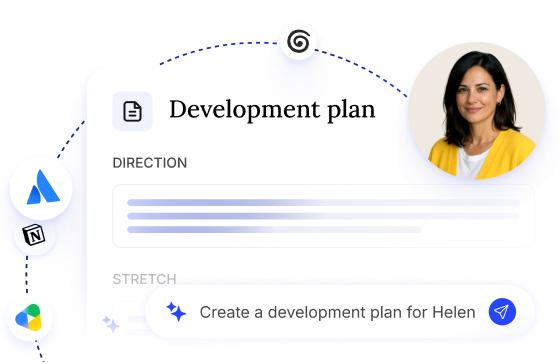
Workleap Performance helps HR teams see these patterns clearly by bringing performance data and feedback into one place. These three new AI-powered features make identifying and developing high-potential employees even simpler:
- AI Cycle Builder: This feature transforms the task of setting up a new performance review cycle. Describe what you want to evaluate, and the AI will interpret your prompts along with company context to generate a tailored performance cycle. This gives HR a consistent framework to assess potential across teams.
- AI-powered reviews: Workleap AI synthesizes data and surfaces evidence-based insights. Reviewers can see achievements and development areas at a glance, making it easier to identify whose progress signals they’re ready for more responsibility.
- Goals: By analyzing progress and feedback across roles and teams, Workleap helps HR see who’s improving and where to focus development efforts next.
How to identify high-potential employees
Curious how to spot promising employees early? Here are some practical HR tools and tips.
Analyze performance data alongside growth potential
To identify high-potential employees fairly, HR teams need to combine performance data with growth signals.
Performance reviews are a strong foundation, not because they show day-to-day productivity but because they surface how someone is evolving in their role. Look for patterns across review cycles: How do employees respond to feedback? Are they turning insights into action? This long-view perspective helps HR teams spot not just who’s performing now but who’s ready for what’s next.
Conduct structured assessments and competency reviews
Structured assessments and competency reviews create a shared framework for evaluating performance and potential. Since everyone is assessed against the same criteria, this method improves consistency and fairness.
Defining competencies also helps HR teams shift the focus from job-specific outputs to capabilities that scale, like collaboration and decision-making.
Collect multi-source feedback
People across the business see different sides of an employee. To give a complete view of an individual’s strengths and impact, you’ll need to collect feedback from peers, managers, and direct reports. This helps HR spot leadership signs that might otherwise be missed.
Monitor learning agility and adaptability through training outcomes
A strong indicator of potential is how employees approach learning. Start by learning who actively engages in development opportunities. Then look beyond participation to see who applies what they’ve learned and improves over time.
Are employees setting more ambitious goals after training? Are they taking on new challenges with more confidence? Tracking these patterns helps HR teams identify employees who are truly growing, not just participating.
Use engagement surveys to gauge motivation and initiative
Employee engagement surveys help HR teams spot early signs of motivation and ownership. Don’t just track overall engagement scores — zoom in patterns to see how employees feel about growth, recognition, and added responsibility over time. These signals often show up before formal performance changes.
Unlocking employee potential with Workleap
Identifying high-potential employees involves analyzing ongoing feedback, performance data, and employee growth. Workleap brings these insights together into one simple platform, making it easier for HR teams to spot potential early.
With flexible review cycles, multi-source feedback, and clear analytics, Workleap Performance helps HR teams spot, develop, and retain high-performance employees without adding complexity to your everyday workflows. And Workleap Compensation aligns recognition and rewards with employee impact and growth, supporting strategic decisions that reinforce development and help retain top talent.
Together, Workleap’s solutions give HR teams the structure and insight they need to build stronger talent pipelines and support future leaders. Learn how to find the best talent for your organization by requesting a demo today.



.avif)


.png)
%2520(1).png)
.avif)