Psychological Safety Survey Template
Measure your team’s levels of psychological safety.
Psychological Safety Survey Template
When people don’t feel safe at work, employee morale and momentum take a tailspin. A psychologically safe environment that lets employees take risks, make mistakes, and share their feedback without fear of retaliation is a sign of a healthy company.
Psychological safety assessment tools like Workleap Officevibe’s Psychological Safety Survey Template help you lay the foundation for a stronger, more connected workplace.
What does psychological safety in the workplace mean?
Establishing a psychologically safe workplace means your team can speak up, ask questions, and take risks without fear.
Harvard Professor Amy Edmonson coined the phrase, defining it as “a belief that one will not be punished or humiliated for speaking up with ideas, questions, concerns, or mistakes.”
In practice, this type of safety means giving people room to learn, offer ideas, and ask questions free of judgement.
In her book, “The Fearless Organization”, she shares a simple psychological safety scale, offering seven questions to measure levels of safety within your company.
Why measure team psychological safety with Workleap’s template?
With Workleap’s Psychological Safety Survey Template, you can use insights gleaned from the survey to gauge how employees feel at your company.
Get a quick read on trust and openness
To create a psychologically safe workplace, you need to see if employees feel open enough to express themselves. Use the Workleap template to create a survey that encourages honest feedback, giving you an instant pulse on individual sentiment.
Monitor progress and link it to the team’s performance
Recurring assessments show where psychological safety is rising, dipping, or stalling out. Our survey template makes it easier to spot these trends, opening the door to insights your leaders can use to course correct.
Drive action and accountability
Collect raw responses from your team to create an actionable path forward with an emphasis on psychological safety. Watch your organization thrive as you prioritize accountability through implementing employee feedback.
How to measure psychological safety with 6 questions
You can’t improve psychological safety and your team’s sense of belonging without asking the right check-in questions. These prompts let team members share what their work environment really feels like.
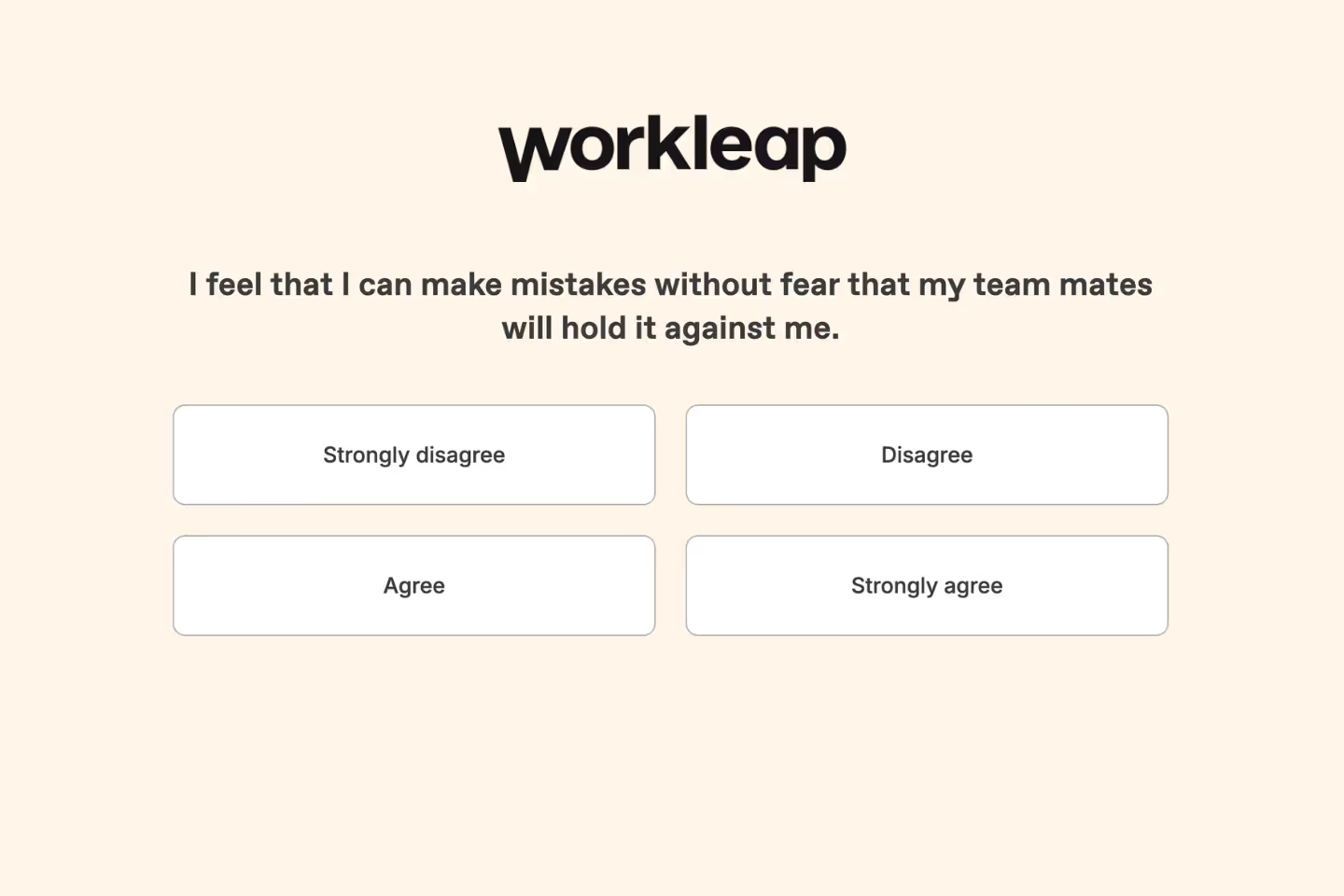
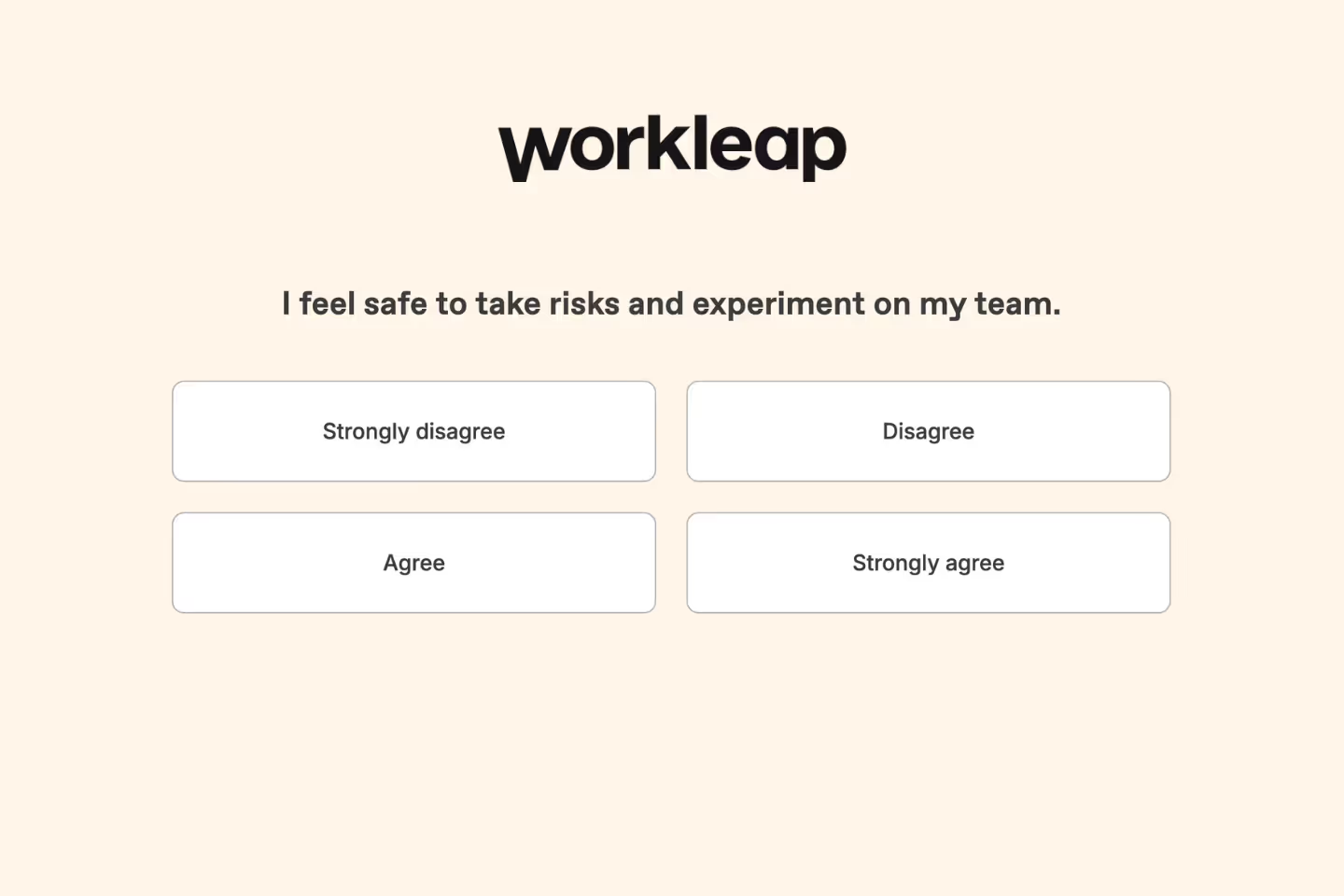
- Do you feel safe taking risks and speaking up on your team without repercussions?
- Can you make mistakes without feeling like you’re being judged or sidelined?
- Do you get constructive feedback in your one-on-one meetings to help you build skills?
- Do your leaders openly model a psychologically safe workplace?
- When challenges happen, do your coworkers keep you informed and contribute to an open environment?
- Are you interested in engaging in psychological safety workshop activities?
When and how to use the Psychological Safety Survey Template
If you’re wanting a clear snapshot of how your team members experience their work environment, the Workleap survey template is a great place to start. Here’s where it really shines:
- Run a survey after major organizational changes to understand people’s work-life balance and where they need support.
- Gather feedback before or alongside big projects to see whether your teams feel engaged and psychologically equipped to deliver tasks on time.
Use it for regular team health checks to keep an eye on what’s helping or hurting.
Sign up to use the Psychological Safety template
4 best practices for psychological safety in the workplace
Create an environment where employees feel welcomed with these four best practices.
1. Listen and act on feedback
When your team members share openly with you, prioritize that feedback. Close the loop so your people see how speaking up actually leads to changes instead of feeling like their opinions are just background noise.
2. Model openness and transparency
Good leadership means admitting when you’re wrong or don’t know something. Show your staff they’re in a psychologically safe workplace by modeling healthy vulnerability.
3. Celebrate learning and progress
Even if it’s messy, learning means accepting setbacks and failure with grace. Treat these moments as opportunities to ask questions like, “What could we do differently next time?” Perfectionism is the enemy of progress, and giving employees a safe environment to experiment and absorb new information eases project pressures.
4. Advocate for your team and set ambitious goals
Stand up for your team members and protect their time and focus. A supportive company culture involves strong advocacy for your people, showing them they can count on you to fix problems they’re facing. You can also inspire your team by setting challenging goals individually and collectively. Giving employees lofty targets to reach helps them innovate, develop new skills, and create a culture of continuous improvement with their colleagues.
Workleap makes psychological safety easier to access through Workleap Officevibe and Performance. Leaders can use Officevibe’s anonymous surveys and pulse data to identify bottlenecks early on. With Performance, these insights are connected to team behaviors and desired outcomes.
FAQs
What are the four components of psychological safety?
Per Timothy Clark’s book on psychological safety, the four components of psychological safety are:
- Inclusion safety: Members feel comfortable and like they belong to the team.
- Learner safety: Employees learn through asking questions and experimentation.
- Contributor safety: People feel safe contributing their own ideas, knowing their voice is heard.
- Challenger safety: Team members feel safe challenging assumptions, ideas, and ways of working.
How often should organizations measure psychological safety?
While timing depends on your goals, most teams find sending surveys biannually works best. According to Harvard Business School, using shorter, more frequent pulse surveys helps identify any immediate issues.
How long does it take to complete a psychological safety survey?
The psychological safety surveys are short and to the point, usually lasting about 5 minutes. Keeping these concise allows for more honest, timely feedback from employees.
