How to bring your company culture and values to life


Etching words like “Integrity” or “Innovation” onto a plaque displayed in your company lobby is a nice sentiment, but creating a culture where leadership models those practices takes time and intentional strategy.
If you’re digging through your computer to find the PDF where you wrote down the company culture and values, it’s probably time for an update. To create and maintain a culture that attracts and retains top talent, you need to integrate your company values into everyday decisions and conversations across your entire organization.
We’ll explore how tools like pulse surveys and feedback loops turn abstract principles into shared values that create a sense of belonging for everyone in your organization.
The difference between culture and values
While company culture and company values are closely connected, they’re not quite the same thing. Your values explain why your organization exists; your culture shows how you bring those principles to life.
What are values?
Core values define the organizational standards that should guide decisions, priorities, and interactions. These foundational beliefs help team members understand what matters most to your organization when problem solving or goal setting. With clearly defined company values, leaders provide a shared reference point for how they expect employees to collaborate and communicate with peers and managers.
What’s culture?
A company’s workplace culture is made up of daily behaviors like the way teams communicate, how leaders respond to challenges, and the fair treatment of employees. In healthy organizations, leaders reflect and reinforce the culture by modeling the company values in their daily responsibilities.
In some companies, culture tends to drift away from the values the organization says it stands for. There’s no one reason for this decay, but common issues include misalignment on projects, siloing employees, and scaling too quickly.
Why culture and values drive organizational performance
When your corporate culture aligns with clearly defined values, your people understand what’s expected of them and how their work contributes to broader goals. As a result, teams collaborate more easily, and employees can focus on doing their best work.
Typically, in a workplace where company culture and values are actively promoted, employee engagement is higher since people feel heard, supported, and connected to the organization’s mission. Building a company culture that promotes a sense of belonging gives employees stability and encourages them to invest in their daily responsibilities and organizational goals.
You may notice a spike in engagement once your team sees your company values promoted and modeled by leadership. As participation rises, employees are more likely to contribute and stay with the company longer, reducing turnover. And as a bonus to this higher engagement and productivity, organizations avoid the hidden costs of lost knowledge and hiring pressure.
Creating a company culture: Example values to guide your team
Strong core values are specific and actionable, providing a clear description of the behaviors, decisions, and priorities that shape a healthy workplace.
Here are a few examples of core values and how they’re reflected in high-performing teams.
Outcome-based ownership
Outcome-based ownership prioritizes making a measurable impact over watching the clock or feeling stuck at a desk. Instead of focusing on strict timelines, organizations encourage employees to take full responsibility for the quality of results they deliver.
Since employees are evaluated on their contributions rather than their working hours, they’re given more control over how and when they work. This autonomy paired with employees taking full ownership of their projects promotes healthy accountability and a better work-life balance.
Radical transparency
Radical transparency encourages open communication at every level of the organization. Leaders share context behind decisions, teams openly discuss challenges, and employees aren’t afraid to ask questions or raise concerns.
When practiced consistently, transparency builds trust and reduces confusion between departments and team members. It also reinforces psychological safety, helping employees feel confident that speaking up won’t be met with negative consequences.
Iterative curiosity
Iterative curiosity encourages teams to experiment often, learn quickly, and improve continuously. Instead of expecting every idea to be a success, leaders understand that learning is part of the process. Employees are expected to test ideas and analyze results before making improvements based on their discoveries.
Over time, this mindset creates a culture where innovation and learning from failure are both part of everyday work. If leaders encourage employees to use their best idea versus their first idea, they’ll create better overall results and support creative thinking.
Inclusive belonging
Inclusive belonging focuses on creating a workplace where every employee, regardless of their race, gender, or sexuality, is respected and celebrated. They feel empowered to contribute, and the organization offers recognition for their achievements.
Hiring a diverse workforce is part of embracing the value of inclusivity, but true inclusion means actively building systems that ensure different perspectives are heard and considered for every decision.
Demographics play a role here, so true diversity and inclusivity can take a while to build. Prioritize belonging by regulating hiring decisions and actively asking for input from all employees. These simple, daily actions spark creativity and strengthen team resilience.
Operational excellence
Operational excellence understands that “good enough” isn’t an option. Companies who value high-quality work push for continuous improvement in everything they do, whether that’s through creating clear hiring processes or streamlining onboarding.
Companies who prioritize excellence understand the value of a competitive advantage and how their delivery and production of products or services determines their reputation. To create this type of culture, your team will need curiosity and flexibility to adjust work from “good” to “great.”
Proactive empathy
Proactive empathy recognizes that employee well-being directly affects organizational performance. Leaders who embrace this value pay special attention to stress levels and team dynamics long before red flags start to fly.
Compassionate managers make space for honest conversations to support the health and psychological safety of their employees. In practice, this could look like managers taking a few extra minutes in one-on-one meetings to perform a mental health check. Employees who feel that leaders value them as people over the work they do develop healthier work relationships.
A 4-step blueprint for building a values-driven culture
Here are four steps that will help you move from basic ideas to behaviors that shape your work environment.
1. Identify the gap
Start by understanding how employees actually experience your workplace culture. Pulse surveys, culture assessments, and regular check-ins reveal where daily behaviors drift away from your stated values. With these data-backed insights, your HR leaders formulate a list of gaps to address.
2. Operationalize your beliefs
Values become meaningful when they influence how the organization operates. Embed them into your hiring criteria, onboarding programs, and performance reviews so employees clearly understand how those principles should guide their work and interactions.
3. Lead by visible example
Leaders play a significant role in shaping workplace culture. If managers model the behaviors your organization values, like transparency, collaboration, and accountability, employees are far more likely to adopt those behaviors themselves.
4. Establish a feedback loop
With regular feedback loops, organizations monitor the health of the work environment and adjust as needed. Since culture isn’t something you can define once and never think about again, gathering employee feedback regularly determines if your company is staying aligned with its values.
Measure what matters with Workleap Officevibe
Even the best-defined values and strongest leadership aren’t enough to sustain a positive culture on their own. To keep things on track for the long haul, you need a glimpse into how your employees feel about the workplace experience.
That visibility is easy to achieve with Workleap Officevibe, an AI-powered engagement and feedback platform designed to help organizations and their employees thrive. Through lightweight pulse surveys and continuous feedback tools, Officevibe gives HR teams and managers a look into what their people really think about the company culture.
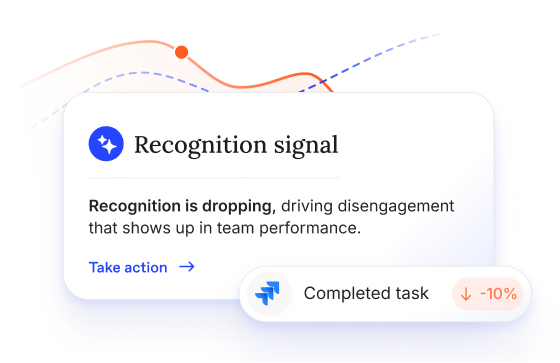
With data-backed insights, employers no longer need to guess at what their employees feel. Instead, Officevibe lets you track results over time to find sentiment dips and other trends before they grow into bigger issues.
Ready to build a stronger culture? Request a demo of Workleap Officevibe today.
FAQ
What’s a positive company culture?
A positive company culture is a work environment where employees feel supported and aligned with the organization’s values. Leadership models the behaviors they expect, and employees feel safe sharing ideas or concerns.
What are the signs of a toxic company culture?
Toxic company cultures often reveal themselves through patterns of disengagement and mistrust. Common warning signs include poor communication, high employee turnover, and leaders who fail to model the organization’s stated values. Over time, these issues chip away at morale, negatively impacting productivity and retention.
How do I get employees to actually “live” our company values?
Employees are far more likely to adopt company values when they see them consistently lived out by their managers and peers. To fully integrate your values, encourage leaders to model the behaviors you want to see and use tools like pulse and team check-ins to keep values visible.




.png)




.png)