7 best employee morale tools for a healthier culture
.png)
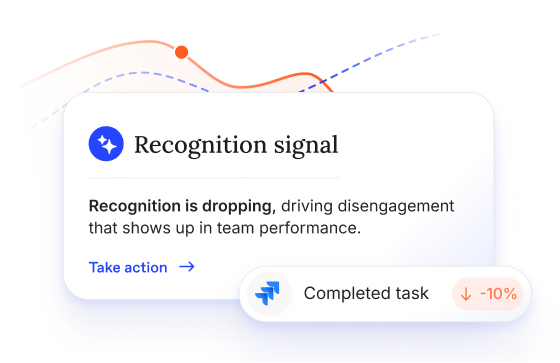

Low employee morale chips away at productivity, drives up turnover, and slowly weakens your workplace culture. Spotting the warning signs and cranking up the morale meter can have a monumental business impact.
In this guide, we lay out the best employee morale tools available for 2026, helping you measure what really matters to your workforce and identify trends before they turn into trouble.
7 best tools for boosting employee morale
According to Gallup’s 2025 State of the Global Workplace report, if the world’s workforce were fully engaged, it would add $9.6 trillion to the global economy. Low morale can have a devastating impact, but the right tools arm you with the visibility and structure you need to turn things around.
Whether through pulse surveys, recognition features, performance tracking, or structured goal-setting strategies, these seven platforms offer real ways to boost employee morale and generate stronger team alignment.
1. Workleap
Workleap combines engagement, performance, and compensation tools in a single platform. If you’re tired of bouncing between apps to figure out why team morale is slipping and what you can do about it, Workleap is the ideal solution.
Key features:
- Workleap Officevibe: Through a mix of pulse, custom, and templated surveys, Workleap Officevibe helps you gauge company culture and catch issues before they lead to turnover. It also includes morale-boosting features like Good Vibes recognition cards, which embed appreciation into the average workday.
- Workleap Performance: Replacing annual reviews with ongoing check-ins, 360-degree feedback, and strategies helps managers tie team goals to company priorities. With Workleap Performance, you can set clear expectations through consistent communication, helping team members feel supported.
- Workleap Compensation: When employees understand how performance connects to payment, they’re more likely to trust your decisions. Workleap Compensation’s centralized approach to pay management takes the guesswork out of pay and benefits.
2. Culture Amp
If you need a deep-dive into industry morale metrics, Culture Amp lets you see how you stack up against other firms. The platform’s market benchmarks help you paint a bigger picture, so you can better understand where to focus your morale-boosting efforts.
Key features:
- Employee engagement surveys: A library of science-backed templates allows you to measure everything from baseline job satisfaction to diversity, equity, inclusion, and belonging (DEIB) initiatives.
- Performance management: Track specific manager and employee performance goals, to ensure they’re consistently driving growth and engagement.
- Analytics and reporting: Heatmaps, trend tracking, and demographic filtering mean you can spot patterns that surface-level tools miss.
3. Leapsome
Leapsome is an all-in-one HR information system (HRIS) that helps teams link continuous performance management with employee morale insights. Rather than focusing solely on surveys or recognition, Leapsome ties together goals, reviews, and feedback to keep development front and center.
Key features:
- Learning paths: Built-in learning modules allow you to tie development directly to performance outcomes.
- 360-degree feedback: Employees and managers can exchange structured feedback from multiple perspectives. Paired with flexible review cycles, these transparent conversations encourage ongoing dialogue.
- Goal alignment with objectives and key results (OKRs): Link individual tasks to high-level company objectives.
4. TINYPulse
TINYpulse by WebMD Health Services is a feedback-based engagement platform designed to measure and improve company culture. Employees share honest insights through short, frequent surveys. The goal is appreciation and feedback being habits rather than once-a-year tasks.
Key features:
- Pulse and engagement surveys: Frequent pulse surveys and advanced feedback tools help you measure how employees feel about their work and environment.
- Cheers for Peers: A built-in recognition tool makes it easy for employees to acknowledge peers’ contributions publicly.
- Anonymity and two-way feedback: Anonymous suggestions and private two-way communication between employees and managers encourage candid feedback.
5. Workday Peakon Employee Voice
Workday Peakon Employee Voice is a continuous listening platform that offers real-time visibility into employee engagement. The platform is able to turn large volumes of feedback into clear, actionable insights that help leaders respond to low morale quickly.
Key features:
- Continuous listening: Regular, customizable surveys capture sentiment throughout the employee lifecycle.
- Manager tools: Managers can view team-specific focus areas and recommendations without HR approval, allowing them to arrange customizable team-building activities.
- Benchmarking and segmentation: Dashboards compare engagement across teams and locations, giving context to morale signals and helping you understand where to focus your efforts.
6. 15Five
By combining performance management software with engagement and feedback tools, 15Five emphasizes the importance of manager and employee conversations. The platform supports morale and employee growth through frequent pulse checks, recognition features, and AI-driven insights.
Key features:
- Short weekly check-ins: Quick check-ins replace time-consuming annual status reports. Employees can share wins and challenges, keeping communication lines open and transparent.
- OKRs and goal alignment: Set and track objectives that tie directly to company-level priorities, keeping everyone aligned on what matters most.
- High Fives and peer recognition: Built-in recognition tools like High Fives allow employees and managers to celebrate contributions publicly.
7. AgilityPortal
AgilityPortal is a digital workplace and intranet platform that helps teams connect and collaborate in a unified environment. It’s designed to eliminate siloed communication and bring together news, chat, recognition, feedback, and resources.
Key features:
- Recognition and social features: Social‑style newsfeeds, shout‑outs, badges, and gamified interactions encourage employees to acknowledge one another publicly.
- Mobile access: Employees can stay connected from anywhere through the mobile app, supporting hybrid or fully remote setups.
- Resource and benefit access: Mobile-friendly access to policies, work-life balance resources, and training materials. A central hub reduces employee frustration and replaces it with a sense of belonging.
How to choose the right employee morale tool for your business
Since every employee morale tool uses a different approach, there’s no one-size-fits-all option for all businesses. That said, the right platform will improve workplace communication and morale, but also support your team’s day-to-day reality.
Try evaluating each tool against the following criteria to help you find a tool that meets your specific needs:
- Ease of use: Complex interfaces and cumbersome workflows can be a physical and mental drag. Look for a clean, intuitive design that makes giving feedback or sharing appreciation a natural part of the day.
- Integration with existing workflows: The easiest tools to use are those that plug into the platforms you already use. Look for integrations with Slack, Teams, and your HRIS.
- Reporting and analytics: Collecting mountains of data is a waste of time if you don’t know what to do with it. Ensure your chosen tool provides clear, prioritized insights that tell you exactly how to increase morale and motivation in specific departments or roles.
- Feedback loops that close: Ignoring employee feedback is one of the fastest ways to harm morale. Clear that hurdle with a tool that makes it easy to communicate the results of employees’ comments, share next steps, and track progress over time.
- Connection to performance and compensation: Tools that link engagement insights to performance management and pay transparency paint a broader picture of what's driving job satisfaction. They make managing underperformance a proactive conversation instead of a reactive scramble.
- Automated insights: You likely don't have time to analyze every feedback comment manually. Consider a platform that uses AI to automatically surface trends and identify risks.
Improving employee morale with Workleap
Effective morale-boosting tools make recognition visible, feedback consistent, and transparency non-negotiable. Strip away any of these elements, and you're left with blind spots that can fuel disengagement.
Many companies' HR tech stacks are needlessly bloated with different tools. One for surveys, another for reviews, a spreadsheet for comp—by the time you've pulled insights from three different dashboards, the moment to act has likely already passed.
Workleap’s combined, centralized approach streamlines the entire process. With the combined impact of Officevibe, Performance, and Compensation, you can spot engagement dips early, celebrate wins, and align pay with performance within a single platform. When employees feel heard, recognized, and fairly compensated, low morale doesn't gain a foothold.
To see how Workleap’s unified approach can help you boost employee morale, request a demo today.
FAQs
How do you rebuild broken morale?
The first step in understanding how to boost morale at work is listening. Collect feedback through surveys, check-ins, and one-on-one conversations to understand root causes. Then, act quickly to recognize contributions, clarify expectations, and make visible changes.
What are the signs of poor employee morale?
Some common signs of low morale are increased absenteeism, a quiet quitting mentality, minimal collaboration, an unwillingness to push beyond basic job descriptions, and a noticeable lack of peer-to-peer recognition.
What is the difference between employee morale and employee well-being?
Employee morale focuses on the team’s collective outlook about work and their environment. Well-being is more about individuals’ physical, mental, and emotional health.




.png)